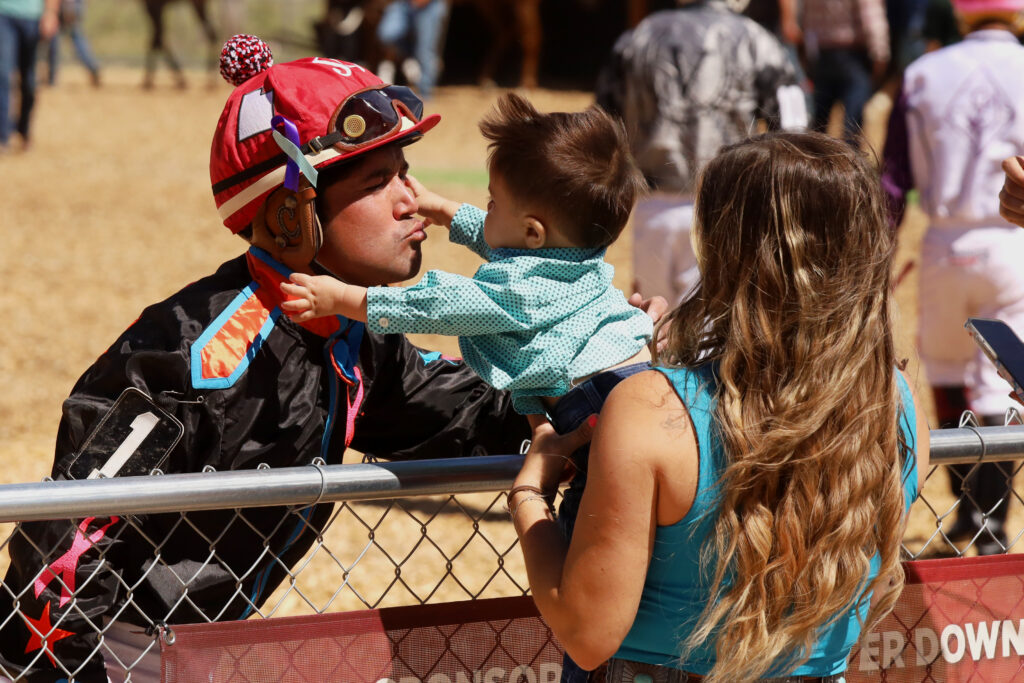

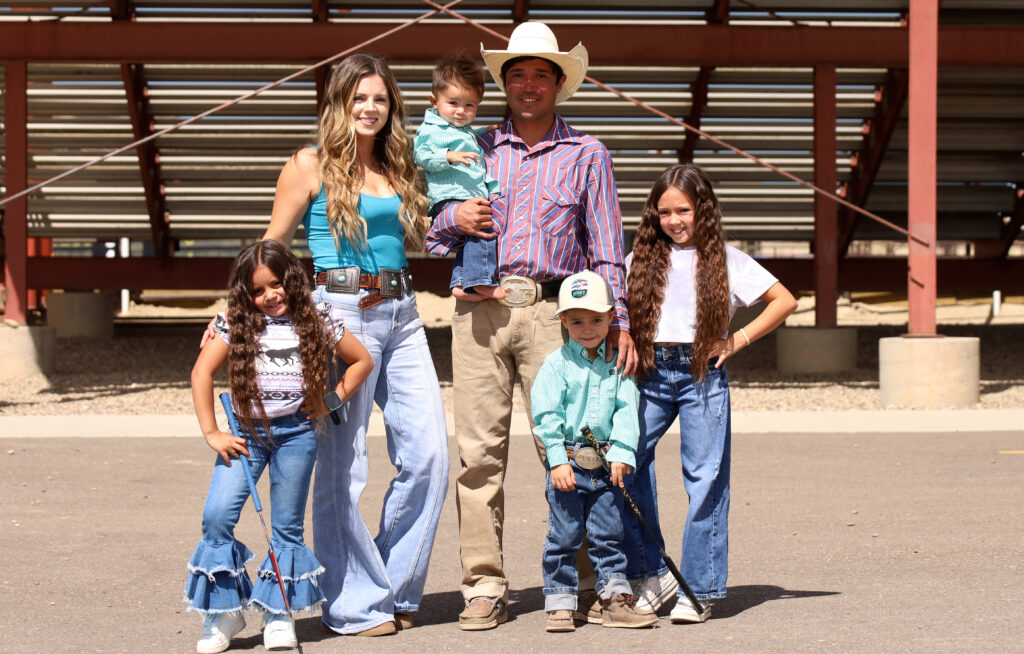
ROCK SPRINGS — At the horse racing office at Sweetwater Downs, four-year-old Julian Canales is flipping a whip like a jockey and urging his imaginary race horse to run faster, mirroring what his father Jesus Canales will be doing in a few hours.
It’s not so different from how Jesus got his own start. As a kid in Mexico, he watched the races with his father and brothers from the grandstands, with no horses of his own.
“We just pretty much got to watch,” Jesus said. “We weren’t involved, you know? We didn’t have horses or anything growing up.”
The family later moved to Fillmore, Utah, where some of his uncles were getting into racing horses. Jesus, just a teenager at the time, started asking them to let him try riding.
“I was 17 when I started galloping and I started riding races in Ely, Nevada that same year,” he said. “We kind of went for it without really knowing.”
Before that, his only experience with horses came from visits to his grandparents’ ranch. On the ranch he would occasionally ride a saddle horse, a far cry from what he does now.
“The horsepower you have from just a broke horse to a race horse, it’s so different,” he said.
Jesus now rides primarily for his wife, Savana, who both trains and owns horses. The family runs on what Jesus calls the inner-mountain circuit: Idaho, Utah, Nevada and Wyoming. He used to chase races through California, New Mexico and Arizona just to make a living but due to Wyoming’s growing purses, he no longer has to leave the region at all.
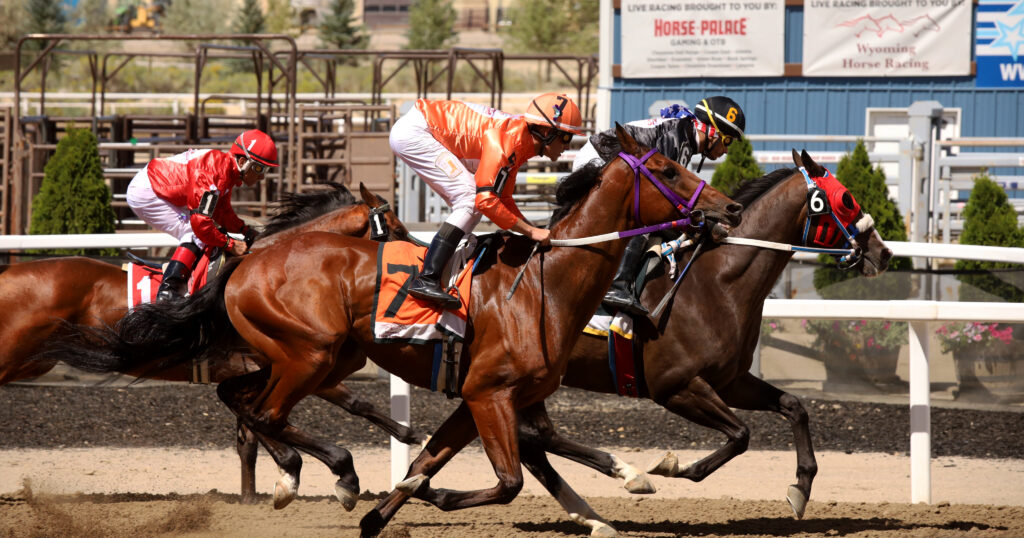
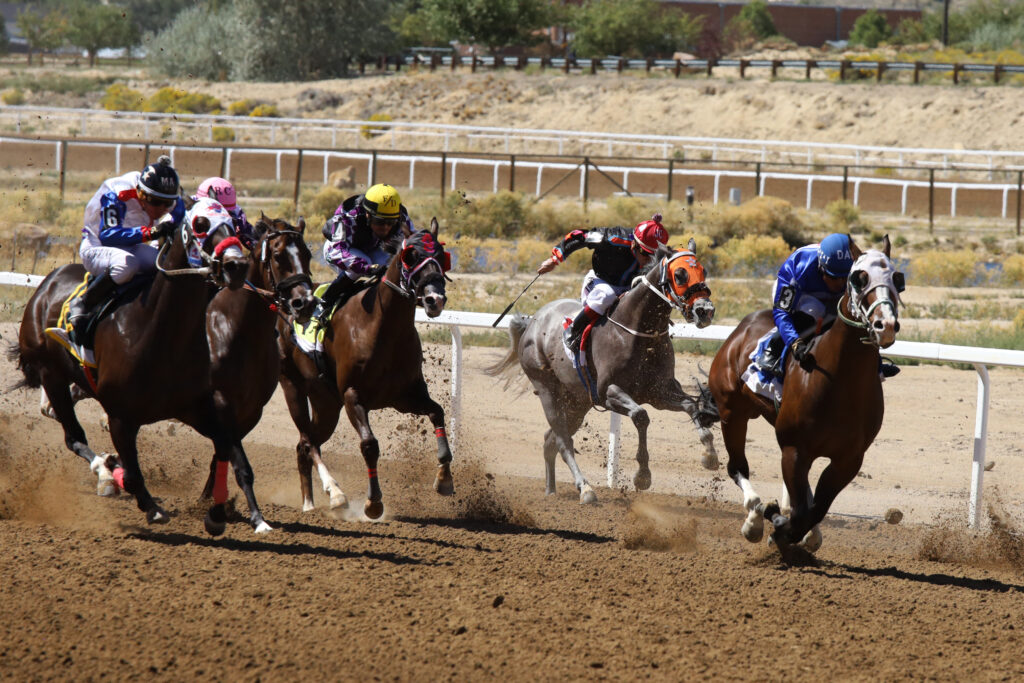
He rode in four trials and two finals Saturday afternoon. Those races were part of a weekend that paid out nearly $300,000 in total purses, including a $163,400 derby final.
When Wyoming’s racing program reopened in 2015, purses started around $1,000 dollars, Jesus said. He’s watched the state’s futurity grow from $20,000 to races now worth hundreds of thousands of dollars. Those numbers now draw riders, trainers and owners across the country, including Texas, Oklahoma and New Mexico who previously wouldn’t have raced in the region.
“Wyoming is on the map now,” Savana said.
He credited the growth to increased purses, added money for futurities and derbies, and Wyoming’s breeder program, which allowed smaller horsemen to compete alongside bigger operations. Jesus credited Sweetwater Downs operator Eugene Joyce for giving back to horsemen through high purses.
“Before, you always had to have another side job too. Now lots of people are quitting their other jobs and doing this full time,” Jesus said.
On Saturday, Jesus rode two horses owned by Mike McKell, whom SweetwaterNOW interviewed last week. He rode Bobs Speedysaintjess and Fire in the Whole for McKell, as well as Savana’s horse MV Favorite Blood.
Canales said he typically rides for the same two barns and knows the horses he races quite well, something he considers an advantage.
“I know what they’re going to do before they do it,” he said. “What they like, what they don’t like, which ones are scared in the gate, which ones can be scared of the public.”
He described the moments before a big race as a mix of tension and adrenaline unlike anything else, all while trying to stay calm so the horses don’t pick up on his nerves.
“If I’m nervous, the horse get nervous,” he said. “So the calmer I stay, the calmer the horse stays.”
Jesus said the horses he rides are more like children than competitors, each with their own moods and quirks.
“They’re just little kids,” he said. “Some of them are easier, and some of them take extra work, time or toys in their stall to keep them occupied. Some get bored.”
Some horses, he said, take losing personally.
“There’s some horses who just really love the competition, and they love winning, and they know when they don’t win,” he said. “They put their nose in their stall, and they’re mad. They will not eat their food.”
Whether Julian becomes the next Canales in the saddle is still years away. For now, Jesus says it’s enough that his son already understands where it starts — in the barn brushing and feeding the horse, bonding with them from the ground up. Long before he ever gets on the racetrack.