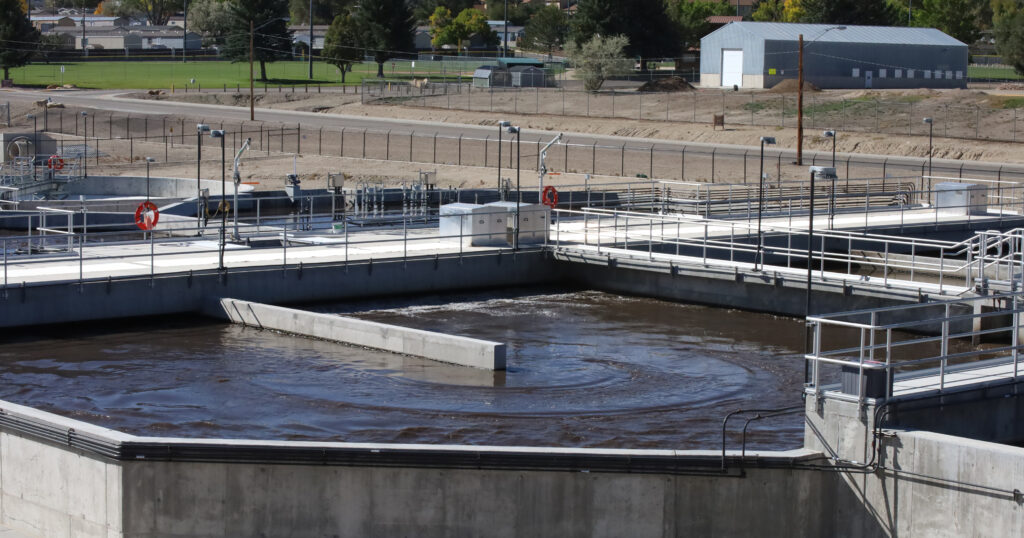

GREEN RIVER — Operators at Green River’s new wastewater treatment plant are building up the population of microorganisms that do the bulk of the plant’s work, hoping to cushion the system against cold weather.
Plant operator Anthony Hodges said the plant hasn’t seen a real winter since opening last year, and they are bracing for how the biological treatment process will perform when the temperature drops.
“The bugs (microorganisms) are like humans, they don’t like the cold very much,” Hodges said.
The plant relies on microorganisms rather than chemicals to remove phosphorus and nitrogen from the city’s wastewater. Hodges said they spend the majority of their time managing the population of microorganisms and the equipment that keeps them healthy.
For a full breakdown of how the treatment plant works, click here.
Why Winter Matters
Cold water can slow down the growth of new microbes, especially those that grow slowly even in good conditions. The microorganisms known as nitrifiers that convert ammonia are among the most sensitive bugs the plant cultivates, Hodges said. A reserve population of bugs is being kept as insurance in case something toxic enters the plant and kills the population.
To prepare for winter, operators have been keeping more microorganisms in the system and allowing wastewater to stay in the process longer. Water now spends about 50 hours in the plant, and the microorganisms stay in the system for about 26 days. Hodges said the water does not come close to freezing while in the plant, in part due to hot water from residents’ showers.
Hodges said plant operators check on the microorganisms daily. Lab tests measure the balance of organic material and food in the system, how much oxygen the microbes use, and how well solids are settling in the clarifiers. He said most adjustments the operators make show results within a few days, but the cold weather could lengthen the time it takes for results to show.
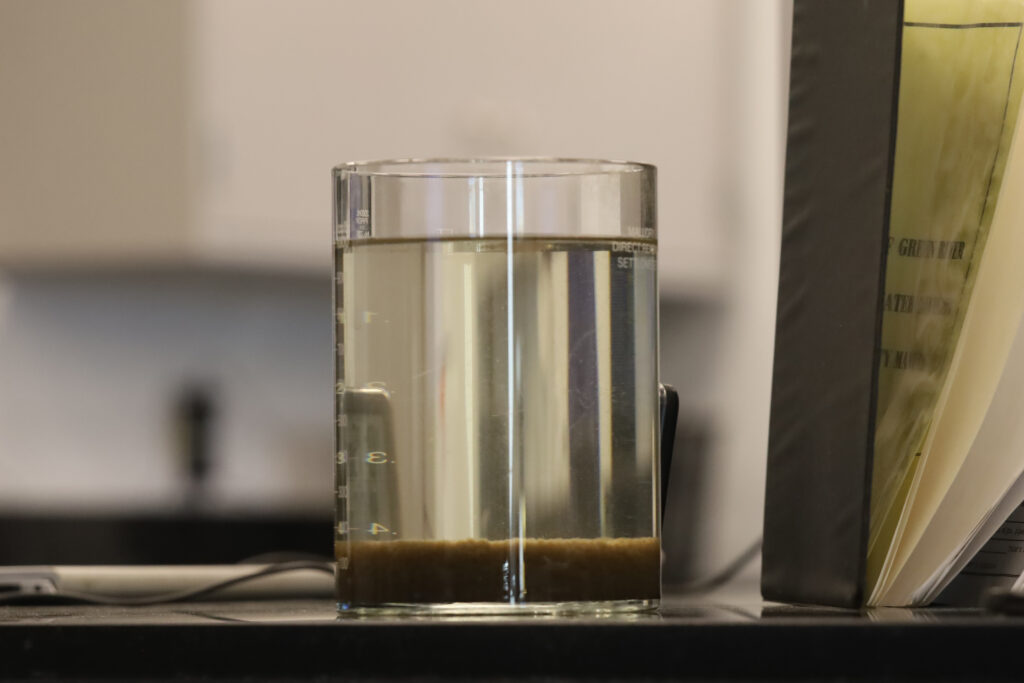

If the population of microbes grows too large or too old, solids can settle poorly in the clarifiers and carry into the river, resulting in an algae bloom. He said they can remove some of the microorganisms from the process and send them to a digester where they are thinned out before being pressed into a solid material and composted.
Hodges said they are trying to run the aerated zones at a lower oxygen level than the standard, letting microorganisms remove ammonia and nitrate at the same time to save on electricity. He said it has worked well for them so far but is uncertain how it will hold up during winter.
Results So Far
Hodges said the plant has not had a permit violation since it started. The Rocky Mountain Water Environment Association recently gave the plant its Plant Performance Award for operations, maintenance, and public relations at a conference in Keystone, Colorado, on Aug. 30.
Hodges said they plan to start scheduled public tours of the plant soon, along with making display boards of some of the more bizarre things that have been pulled from the screens and pictures describing the plant’s processes.
Hodges said many residents do not realize how much work goes into treating wastewater.
“There’s a ton of work and even more science involved in all of it,” Hodges said.