
ROCK SPRINGS – The Bureau of Land Management (BLM) will issue its proposed Rock Springs Resource Management Plan (RMP) and the final environmental impact statement (EIS) Friday, kicking off a 30-day protest period and a 60-day review by Gov. Mark Gordon’s office.
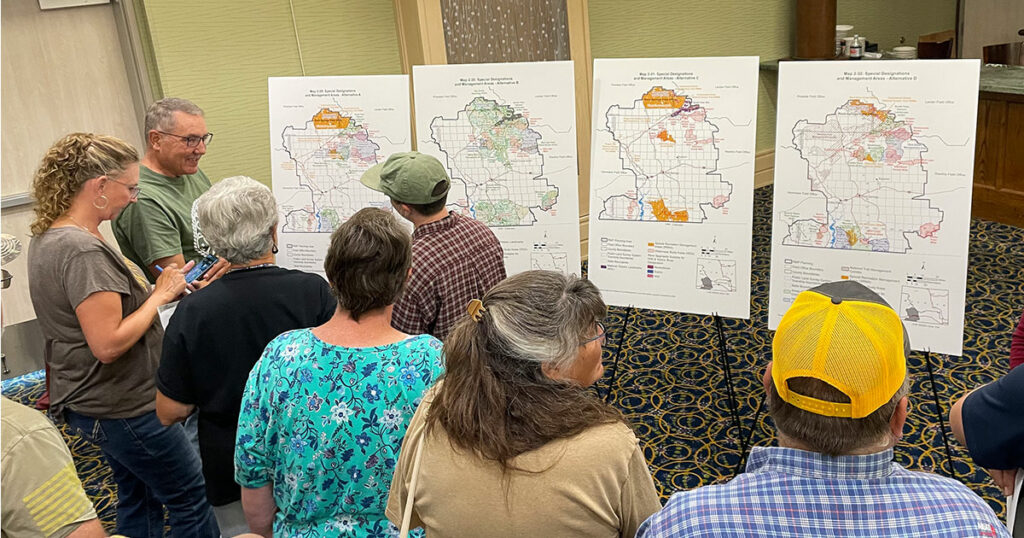
The proposed RMP, which will guide how the federal agency will manage 3.6 million acres of surface land, will combine aspects of its Alternative B, which focuses on the conservation of resources, and Alternative D, a balanced approach that was developed with input from local and statewide organizations. This is in contrast to the preferred alternative the BLM set out last year, which would have focused on the conservation-based approach in Alternative B. The proposal resulted in a firestorm of public comment and involvement in the process.
Gordon is already expressing disappointment in the BLM’s environmental impact statement.
“Unfortunately, but not surprisingly, the FEIS for the proposed Rock Springs RMP does not meet Wyoming’s expectations of durable, multiple use of public lands. One quarter of the field office remains slated for area of critical environmental concern (ACEC) designation. State agencies and I are still sifting through the details and looking at specific maps, management actions, and stipulations,” Gordon said in an emailed statement.
He said the public comments and work his task force put in on the proposed RMP helped shift the BLM’s initial position on the Rock Springs RMP, but more work is needed to compare the new document to what is happening “on the ground.”
“A cursory review makes it clear where the BLM considered local and cooperative input, and where the agency chose to force through national agendas. It is important to compare this document to the current status on the ground, and not by how much it has shifted away from the BLM’s worst-case scenario. Much work is left to ensure the BLM is staying within the bounds of state and county policies, as well as federal law. Additionally, we await further information to see how this RMP overlaps with the announcement of the sage-grouse management plan amendment and BLM implementation of their recent Public Lands Rule,” Gordon said.
Gordon also promised the state will file protests against decisions where local and state comments were ignored.
Grazing, recreation and energy development will not be axed by the BLM. For grazing, only .02% or 8,576 acres of 3.6 million would be closed to grazing according to the document. With recreation, the BLM has not proposed the closure of roads.
On energy development, nearly half of all the minerals managed by the BLM are already leased and development could continue on those lands. A geological survey highlighted by The Wilderness Society shows that significant and new oil and gas deposits are not likely to be found in the Big Sandy Foothills and Northern Red Desert.
The proposed RMP would allow oil and gas leasing on 2.7 million acres of land, trona leasing on 3.2 million acres of land, and designates more than 935,000 acres of land as ACECs.
County Commissioner Expresses Concerns

The ACECs and potential impacts to the oil and gas industry are of concern to Sweetwater County Commissioner Taylor Jones. Jones attended a cooperator-only meeting hosted by the BLM that gave an overview of the RMP. He said the BLM doesn’t provide advanced copies of the proposed document and as such, he and the county have not had the opportunity to review the document in detail. However, he says while there are good aspects of the document, he agrees with Gov. Gordon’s comments.
“I didn’t leave the meeting with a good feeling for oil and gas and public access,” he said.
Jones said the addition of more ACEC-designated land concerns him, believing the designation being the first step in limiting public access to public lands. He said he heard comments from a BLM official that travel management within the Rock Springs Field Office-administered lands would be examined at a later date.
“It’s not gone entirely, it’s just not in this document,” he said.
Brad Purdy, a spokesperson for the BLM, says he respectfully disagrees with Jones’ assessment, saying maintaining and improving public access to public lands is a driving directive the agency operates under.
“I don’t think the goal is to limit public access to public lands,” Purdy said.
He said the agency did erroneously include travel management language in the draft document released last year, but has removed that language as it said it would. He said the agency works to improve access to public lands and when considering a land acquisition or improvement plan, and considers how an act would improve access and enjoyment of those lands. Purdy points to work the BLM completed to the northeast of Sweetwater County near Casper that has improved access to the North Platte River, as well as work it routinely does to improve campsites and other recreation facilities.
He said travel management is part of the process, but requires a separate NEPA (National Environmental Policy Act) process from the RMP. He said the process is lengthy, but the agency does want to improve access where it can.
Conservation Groups Support Proposed RMP
While Gov. Gordon has expressed disappointment in the document, conservation groups are praising the BLM. However, they also argue the RMP isn’t perfect.
“We’re heartened to see that the BLM truly listened to public input over the last year and weighed varied interests with such diligence and care. The proposed Rock Springs RMP will help safeguard world-renowned wildlife habitats in the Northern Red Desert and Big Sandy Foothills, plus important cultural areas and hunting, fishing and OHV access. It balances local infrastructure and energy needs with our obligation to steward these special lands for future generations and protect our Wyoming way of life,” Julia Stuble, the Wilderness Society’s Wyoming state director said.
While Stuble admits there are still some concerns her organization has, such as not adequately protecting stopover and highly-used portions of big game migration corridors and making the Northern Red Desert and Big Sandy Foothills off limits to mineral development, Stubble says the plan is a step forward in a “more holistic and thoughtful management of these public lands.”
Additionally, the Wyoming Outdoor Council and the Wyoming Wilderness Association have added their voices in praising the BLM’s work.
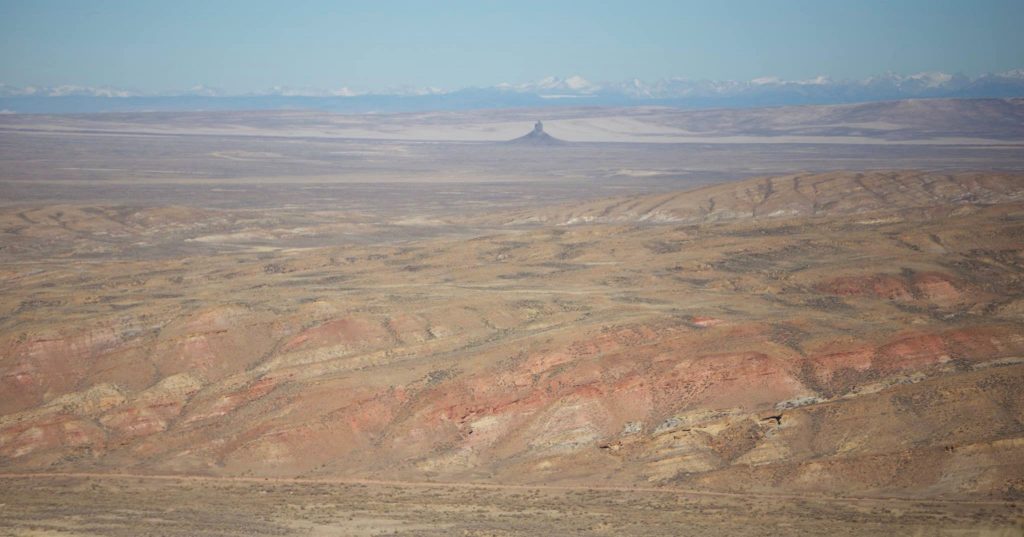
“We’re pleased to see the BLM incorporated public feedback and input from Gov. Gordon’s task force into a plan that serves local communities, iconic landscapes, and wildlife,” Alec Underwood, program director for the Wyoming Outdoor Council said. “Among other important agreements, the task force reached consensus on the need to protect gold-standard habitat and other significant natural values in the Big Sandy Foothills and Northern Red Desert, such as Boar’s Tusk. It’s encouraging to see the BLM’s responsiveness, as well as the agency’s efforts to build on the task force’s strong foundation where agreement wasn’t reached, as they did for the Big Sandy Foothills.”
Both Underwood and Lauren Marsh, the BLM program manager for the Wyoming Wilderness Association say the plan could be improved, both say they appreciate the BLM’s willingness to involve the public and the work it has done.
“It is a testament to the dedication of all who love and care for the lands within the Rock Springs Field Office that the proposed plan includes some robust, durable, and reasonable conservation measures for the Northern Red Desert and Big Sandy Foothills. We applaud the BLM for making the hard decisions necessary to ensure these wild and working landscapes continue to thrive for future generations to use and enjoy,” Marsh said.
Josh Coursey, president of the Muley Fanatics Foundation in Green River, also commented on the document.
“BLM’s proposed plan is not only critical for sustaining the long-term health of sensitive fish and wildlife habitat in southwestern Wyoming, it also honors the wishes of the Greater Little Mountain Coalition and Gov. Gordon’s Rock Springs task force,” Couresy said. “It could not have come at a more critical time. I applaud the BLM for listening to the voices of hunters and anglers, as well as elected officials and the people of southwestern Wyoming. The RMP brings much-needed updates to the current plan, which is sorely outdated, and is a critical step to ensuring that the right combination of multiple uses, including hunting and fishing, grazing, wildlife conservation and responsible energy development, are prioritized for years to come.”