
SWEETWATER COUNTY – A Rock Springs woman was sentenced after pleading guilty to seven felonies.
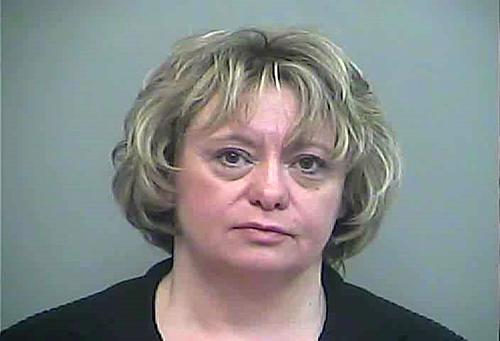
Former Sweetwater County Community Health Center CEO, Tina Linkenauger, was sentenced by Judge Nena James. She pleaded guilty to seven felony counts on July 28. They included three charges of possession of forged writings, three counts of forgery and one count of false written statement to obtain property or credit.
On the three charges of possession of forged writings and false written statement to obtain property or credit, James sentenced Linkenauger to two-to-four years in prison. On the three counts of forgery, James sentenced Linkenauger to three-to-five years. All jail terms run concurrently.
Linkenauger was also ordered to pay various fines, fees and association court costs. The State was represented by Sweetwater Deputy County Attorney Teresa Thybo.
BACKSTORY OF FORGERY CASE
According to the court documents, on Feb. 25, 2013, Special Agent Daniel W. Allison II was assigned this general investigation by the Wyoming Attorney General Greg Phillips and the Division of Criminal Investigation Director Steve Woodson. The investigation involved the Attorney General’s Office, Contacts Division and Department of Family Services Rock Springs Field Office, a memorandum of understanding and a financial contract through the United States Department of Agriculture, Rural Development, which appeared to have forged signatures on it. The forged signatures include two Wyoming State Employee’s the first being the Rock Springs Field Office Lead Supervisor’s signature and the second, a senior assistant to the Attorney General’s signature.
Allison learned this investigation had two focuses. First, a loan request and supported documentation from the Sweetwater County Community Health Center Inc. to the United States Department of Agriculture Rural Development. The second focus was in regard to supported documents for the loan, which involved contracts between State of Wyoming Agencies and SCCHC, which requires the Wyoming Attorney General’s Office Contracts Division approval.
The investigation involved the USDA RD as a lender or loan guarantor for a loan from the Community Development, Community Facilities Loan Program to the health center. Based on the loan program, the lent money could be used to construct, enlarge, or improve a community facility for health care in this case. This can include costs to acquire land needed, pay necessary professional fees and purchase equipment.
Applications are handled by USDA Rural Development Field offices and they provide application materials, current program information and assist in the preparation of an application.
On April 18, 2011, the new health center applied for federal assistance through the loan program for $1,918,900. The loan document included an application for federal assistance in the amount of $1,918,900 and a direct/grant obligation request for the same amount to be loaned to the health center at a four and a quarter percent interest.
There was also a grant award agreement between the Wyoming Department of Health with a final date of March 23, 2012, an Amendment One contract with the Dept. of Health and execution sheet with terms and conditions, a letter from the University of Wyoming, school of nursing and a cooperative education agreement, a letter from the state of Wyoming Department of Workforce Services regarding workforce development funds, as well as a copy of a contract with the Wyoming Department of Health dated Nov. 16, 2010 and a copy of a Wyoming collaborative mental health care mow dated Oct. 2, 2012.
Additionally, the health center applied for funding through the US Dept. of Health and Human Services for approximately $650,000. This funding was linked to the USDA RD Loan as a show of good faith to help with operating expenses, which in turn showed the lender could be repaid through a solvent and thriving business. The Health and Human Resources denied the grant, which put the USDA loan in jeopardy of being disapproved.
As a result, the health center was required to show they could make up the $650,000 difference. This resulted in them gathering documentation in the form of MOU’s with other agencies or entities to show a funding stream ultimately making up the difference in the money not awarded.
The health center submitted MOU’s to the USDA office in Riverton. Which were then sent through the chain to the Office of General Counsel and later to the head of the Community Programs Division.
Included was a letter from the health center to the USDA signed by Linkenauger discussing alternative means to cover the money, two MOU’s between Southwest Wyoming Recovery Access Programs, one between the Sweetwater County Child Development Center, one between the Young At Heart Senior Center, one with Life Skills Wyoming, one with Sweetwater County School District No. 1, Head Start, one between the Wyoming Health Initiative one between the Wyoming Department of Family Services dated Sept. 6, 2011 which was unsigned and then another dated Nov. 28, 2011 signed by Dana Shineberg, James Michael Causey and Linkenauger.
The reviewing agency looked over the MOU’s and decided they were nonbinding and the operating expenses for the health center vulnerable and the potential for loan repayment would be risky. The health center added an addendum to the Young at Heart Home Health, Head Start, Like Skills, WHI, DFS, Young at Heart Senior Center and SW-WRAPS which stated money pledged could not be cancelled.
During the course of the process, the USDA checked on several of the MOU’s and amended MOU’s and learned that a DFS Lead Supervisor’s signature, Wyoming Attorney General’s Office Senior Assistant Attorney General;’s signature and a Certified Nurse Midwife’s signature may have been forged on MOU’s for various listed agencies or organizations. The submitter of the documents was Linkenauger and her name and signature appeared on several of the documents.
The second focus in this investigation was based on the potentially forged documents of a Wyoming Attorney General’s Office Senior Assistant signature. When checking contracts, the Attorney General’s Office has a set guideline with a general order of signatures. On the MOU’s and AMOU’s there were varying signatures, but in most cases, Linkenauger was the formal business entity signature and investigators learned through the USDA RD that Linkenauger was the submitter of the documents and loan documents.
On Feb. 18, 2013, Rock Springs Police Department investigators spoke with Starla Yerkovich regarding the center. She said in 2011, Kolbi Williams and herself were contacted by Linkenauger to become part of the health center and both initially agreed. Investigators were told Linkenauger controlled all the paperwork and was the primary overseer of the project. There were some issues between Williams and Linkenauger which caused Williams to seek employment outside of the health center.
Yerkovich said in September of 2011 she signed an MOU with the center and added this was the last time she had contact with Linkenauger. In February of 2013, the USDA contracted Yerkovich and asked about her signing an AMOU. She said she looked over a faxed copy and informed the USDA she did not sign the document and would not have based on the language contained in the AMOU. RSPD officers noted two signatures appeared very different.
Court documents then explain on Feb. 26, 2013, officers of the RSPD and Special Agent Allison spoke to Dana Shineberg, DFS Sweetwater County Social Services Lead Supervisor, who denied ever signing an MOU with the health center. Allison was shown Shineberg’s signature and noted it did not look like the signature listed on the MOU. Shineberg also explained to investigators she did not have the authority to enter into a MOU such as the one presented to the USDA. Any MOU of that nature would be forwarded through her chain of Command to Cheyenne and turned over to the Attorney General’s Office.
She said around Feb. 14 of 2013; she was contacted by the USDA regarding signatures on MOU’s and the Sweetwater County Health Center. She said she was confused and did not recall signing any documents. Documents were faxed, and Shineberg said neither of the signatures was hers.
On March 4, investigators spoke with Williams who was the Director of WHI and Yerkovich was the President. Williams said she worked with Linkenauger and there was not a lot of paperwork she did because Linkenauger did all the paperwork. She also informed investigators, Linkenauger had spoken to her about money trouble and had a couple of checks, which were not for high amounts, bounce.
The next day, investigators again spoke with Yerkovich who confirmed that they had met with Linekanguer and Dr. Grant Christensen, the Medical Director of the health center at that time, to sell the idea of the center. She said she had always dealt with Linkenauger regarding any health center business at the Broadway Street address for the center.
On March 7, RSPD Officer Aaron Hager spoke with Cathie Hughes, the CEO of SW-WRAP regarding the contracts with Linkenauger. Documents say she said she and Linkenauger signed two MOU’s. Additionally, Hughes later signed another with linkenauger. Agent Allison later reviewed the SW-WRAP MOU with Linkenauger and Hughes’ signatures. Linkenauger’s signatures appeared extremely similar to the signatures of the others.
On May 14, 2013, a search warrant was obtained from the Circuit Court judge for the Third Judicial District of Sweetwater County, Judge Daniel Forgey. Items included financial records, handwriting examples and several electronic devices and computers.
During the warrant, it was learned Linkenauger used a cloud-based file storage system called a Drop Box. Linkenauger signed a DCI consent to search and seize form, and computers and related equipment were sent to Cheyenne where they were stored and later examined.
On May 15, 2013, investigators from several departments interviewed Linkenauger. After being read her Miranda Rights Linkenauger was questioned about the signatures. She said the persons in charge of obtaining signatures were herself and Christensen. She was in charge of the WHI, and the DFS and other MOU were overseen by both of them.
Documents also said Linkenauger said she submitted everything to the USDA Office and stated her current salary was zero dollars with the health center, but after the loans went through it would be $118,000. She said she signed her signature to all the MOU’s and was unsure about the addendums but, during the interview, documents said she changed her statement and admitted to cutting and pasting Causey’s signature on the documents. She also said she got the signature from another contract and cut the signature out and pasted the signature on the other document and re-copied it.
She told investigators she knew it was wrong and did not think of the ramifications. She insisted she did not forge Yerkovich’s signature but admitted to forging Shineberg’s signatures.
Documents said It was made clear during the interview Dr. Grant Christensen did not know about the forged signatures.