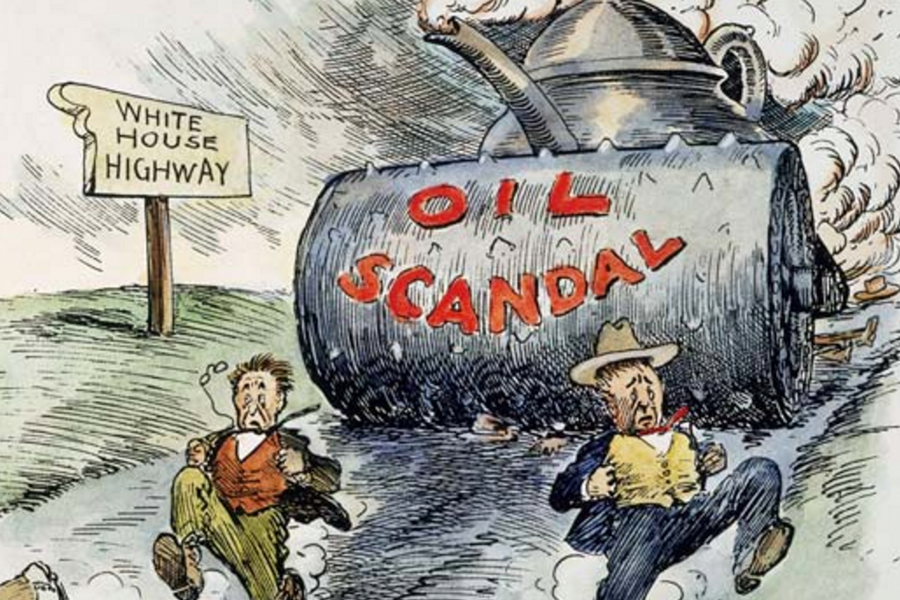

On April 15, 1922, Wyoming Senator John Kendrick set in motion the Senate investigation of what came to be known as the Teapot Dome Scandal. The investigation looked into the secret leasing of the U.S. Navy’s Federal Oil reserve near Salt Creek in northern Natrona County Wyoming and two others in California to two private oil companies.
.
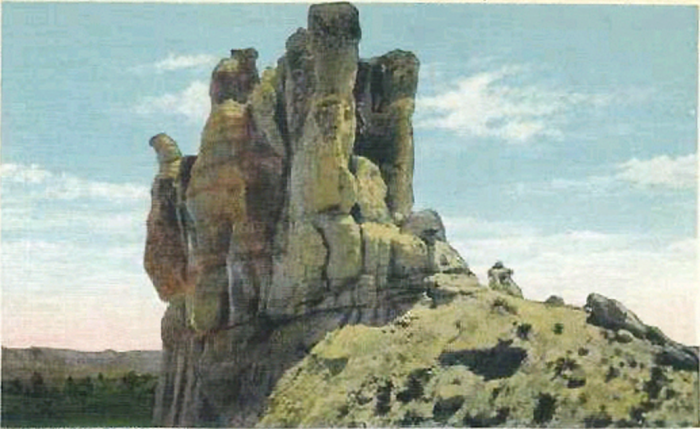 Teapot Rock near Salt Creek in northern Natrona County.
Setting Aside Naval Reserves
After the Navy switched from coal-powered to oil-powered ships, the USS Wyoming being the first ship to make the switch in 1909, the Navy asked Congress to set aside federally owned lands in places where known oil deposits most likely existed. These “naval petroleum reserves” were only to be drilled when a national emergency made it necessary. Congress designated three locations as oil reserves, one near Salt Creek in northern Natrona County near the Teapot Dome rock formation and two in California.
.
 President Harding and Secretary Fall.
Setting Up the Deals
In 1920, Warren G. Harding was elected president and chose his friend New Mexico Senator Albert Fall to be his Secretary of Interior. Soon after his appointment, Secretary Fall convinced President Harding that the Department of Interior should be given control of the reserves because it could better manage them. With both the permission of President Harding and Naval Secretay Edwin C. Denby, Secretary Fall gained control of the naval oil reserves. The Teapot Dome Scandal was about to begin.
.
Secret Deals and Bribery
In April of 1922, Secretary Fall secretly gave Harry F. Sinclair of the Mammoth Oil Company exclusive rights to the Teapot Dome naval reserves. He also secretly gave Edward L. Doheny of the Pan American Petroleum Company exclusive rights to the naval reserves in California. While it was legal for Secretary Fall to allow private companies access to government lands under the Mineral Leasing Act of 1920, those reserves were only to be drilled in an emergency. Beyond that, each company received generous leasing terms for the lands and no public bidding for the leases ever occurred.
Despite the fact that the reserves were only supposed to be drilled in emergencies, Fall’s actions were potentially considered legal. Bribes from both Sinclair and Doheny are what would later get him in trouble. Fall was given a $100,000 no-interest “loan” from Doheny (about $1.3 million today). He was also given around $300,000 in government bonds and cash by Sinclair (about $4.2 million today).
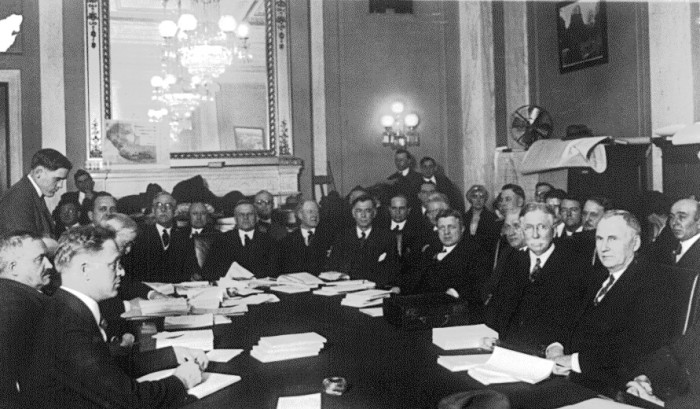 The Senate hearing where Edward Doheny testified to giving Secretary Albert Fall $100,000 during the Teapot Dome Scandal investigation.
Senate Investigates the Scandal
On April 15, 1922, Wyoming Senator John Kendrick introduced Resolution 277, which requested information from Secretary of the Navy and the Secretary of the Interior about whether negotiations had occurred to lease naval oil reserves. If so, the Senate wanted to know who was involved, the terms and conditions of any agreements and if competitive bidding would be opened to the public for the lease on the lands. After receiving a copy of the lease, the Senate unanimously passed an additional resolution allowing the Committee of Public Lands and Surveys to conduct an investigation.
In response to the Senate’s resolutions, President Harding, Secretary Fall and acting Secretary of the Interior Edward Finney attempted to explain the legality of and necessity for why the lands were leased.
Despite President Harding’s and Secretary Fall’s assurances of legality, members of the oil industry complained to Wisconson Senator Robert La Follette about possible unfair dealings. Senator La Follette, skeptical of wrongdoing, presented their complaints to the Senate in May of 1922. After La Follette’s Senate office was torn apart, his suspicions increased.
Many Senate members expected the investigation would be a “tedious and probably futile inquiry” so they appointed Montana’s Thomas Walsh, the panel’s most junior minority member, to chair the investigation. After hearing from dozens of witnesses and over the period of a few months and not discovering any damning evidence, the investigation was losing momentum. However, Edward Doheny’s admission to the Senate that he lent Secretary Fall $100,000 dollars broke the case open.
.

Three Guilty Men, only One Conviction
When it was all said and done, Fall was convicted of bribery, sentenced to one year in prison and a fine of $100,000. Surprisingly, both Doheny and Sinclair escaped conviction on bribery charges, but their leases were later canceled. Apparently, the rich were exempt from conviction. Other events led to Sinclair serving six and a half months in prison for contempt of Congress and jury tampering.