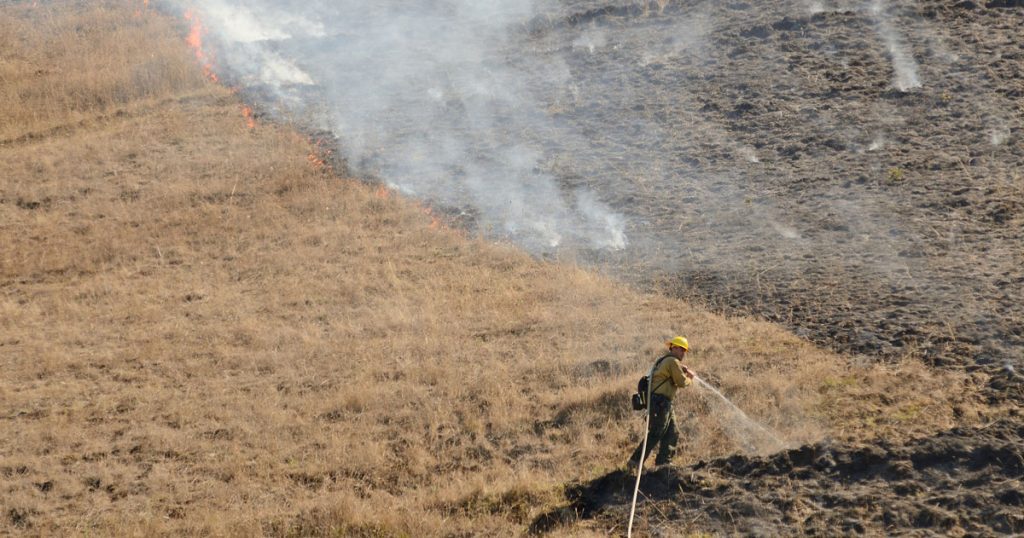

ROCK SPRINGS– The Rock Springs Fire Department is developing a plan to develop an urban interface wildlands fire program, in which they will build capabilities to deal with large-scale hazardous incidents.
Making Plans to Deal with Wildland Fires
With the amount of wildland fires across the country, specifically in California at the moment, the RSFD is taking the issue into consideration.
At the Rock Springs city council meeting on December 19, Councilman Tim Savage discussed the fire department’s plan during the board reports part of the meeting. Savage said at the last Emergency Services Committee meeting, they discussed the fire department’s plans.
He said that by signing up with the Resource Ordering Status Service, or ROSS, the fire department will be able to send a crew of three with the department’s Type 6 Truck to any land fires or other hazardous incidents in the area.
ROSS
According to the National Wildfire Coordinating Group website, ROSS is, “A national system that provides automated support to interagency and agency dispatch and coordination offices.
“The system will provide current status of resources available to support all-risk activities; enable dispatch offices to exchange and track resource ordering information electronically; enable dispatch offices to rapidly and reliably exchange mission-critical emergency electronic messages.”
Type 6 Truck
The Type 6 truck is an F550 wildland fire truck, with a 300-gallon capacity. The truck could earn over $35,000 for a single deployment, which is $72.50 per hour.
The truck can be deployed for 21 days at a time before needing a break. The city would also be reimbursed for the crew’s wages, according to Councilman Savage.
Developing Skills
Savage said the crew would receive valuable training and experience at no cost to the city.
By working with the Sweetwater County Fire District, the BLM, and the forest service, the fire department would build skills and a rapport, allowing these agencies to mutually support each other in event of land fires that threaten the city of Rock Springs.
The crew would also receive the knowledge to educate the community on how to protect themselves from possible land fires and other hazardous incidents.
Hazardous Materials the Community is Exposed To
Though the community does not experience hurricanes and does not see many tornadoes, RSFD fire chief Jim Wamsley said the community is exposed to other hazards.
The city has the Union Pacific Main Line running through it, and with Interstate 80, hazardous materials are transported right through the community every day. Wamsley also said that the last three years, the community has experienced major flooding.
Need Capabilities to Handle Large-Scale Incidents
The floods have not made extreme large-scale impacts, Wamsley said, but the fire department needs to have the capabilities to handle large-scale incidents when they do occur.
He explained that the plan they are developing is an avenue for the city’s own emergency responders to acquire capabilities and knowledge to manage incidents, rather than bringing outside responders to deal with incidents, and having to pay those responders.
Wamsley said the plan will create an opportunity to put revenue back into the city, and will develop the skills within the community’s own emergency responders for all hazardous incident management services.