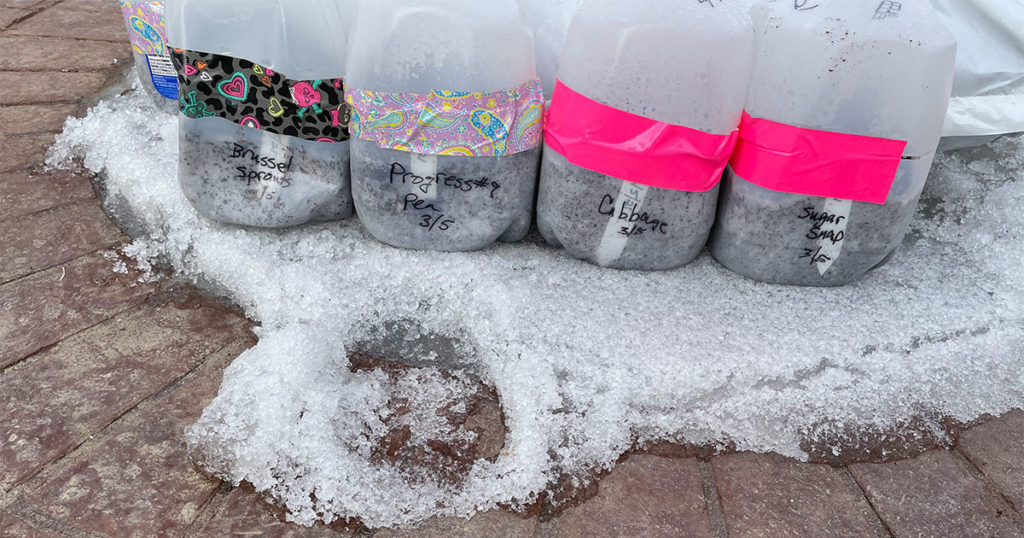

SWEETWATER COUNTY — It’s not too late to start winter seed sowing and have plants ready for spring and summer planting.
During a recent discussion at the White Mountain Library, local gardener Laura Schmid-Pizzato gave residents tips on how to start winter seed sowing by using plastic jugs.
“Winter sowing is when you start seeds in containers and leave them out in the elements anytime after the winter solstice in December,” Schmid-Pizzato said. “The process replicates how seeds would naturally grow from falling off their flowers and sitting in the elements all winter.”
Some seeds even require a cold stratification period, so instead of placing them in a refrigerator or freezer, the winter sowing completed the process for the gardener.
The steps to starting a jug winter seed sowing system are pretty easy. All it takes is some seeds, plastic jugs, wet soil, Duct tape, a scissors or exacto knife, and a marker.
Once all of the supplies are collected, the gardener can follow these simple steps.
- Take the rinsed out plastic jug, such as a milk jug, and cut it horizontally from handle to handle, leaving an inch to be able to open it like a hinge.
- Poke four to five holes in the bottom and throw away the cap.
- Fill it with 2-3 inches of good potting soil.
- Add the seeds and cover as recommended on the seed package.
- After planting the seeds, close the container and fasten it securely, usually with duct tape.
- Label the jug with what you planted and the date sown.
- Place the jug outside directly on dirt where it will get exposure to the elements, snow and rain, but also protect it from getting blown over by the wind.
Flowers can be densely seeded, however vegetables should be much fewer such as three to four seeds for squash, four to five seeds for tomatoes, and five to six seeds for cucumbers. Brassicas such as broccoli and cauliflower do well in winter sowing and so do leafy greens such as cabbage and lettuce. Herbs also do well.
“The beauty of winter sowing is that you just put the jugs out and let nature take care of the seedlings,” she said. “The only maintenance you have is to make sure the jugs don’t get too dried out, and if they need water, use the ‘bottom watering’ technique where you fill another vessel with water and place the jug into it. The water will creep up through the bottom holes and water the soil and seedlings.”
Schmid-Pizzato said she will go out and check on her sowing jugs at least once a day to make sure they are doing well and to see if they need watering.
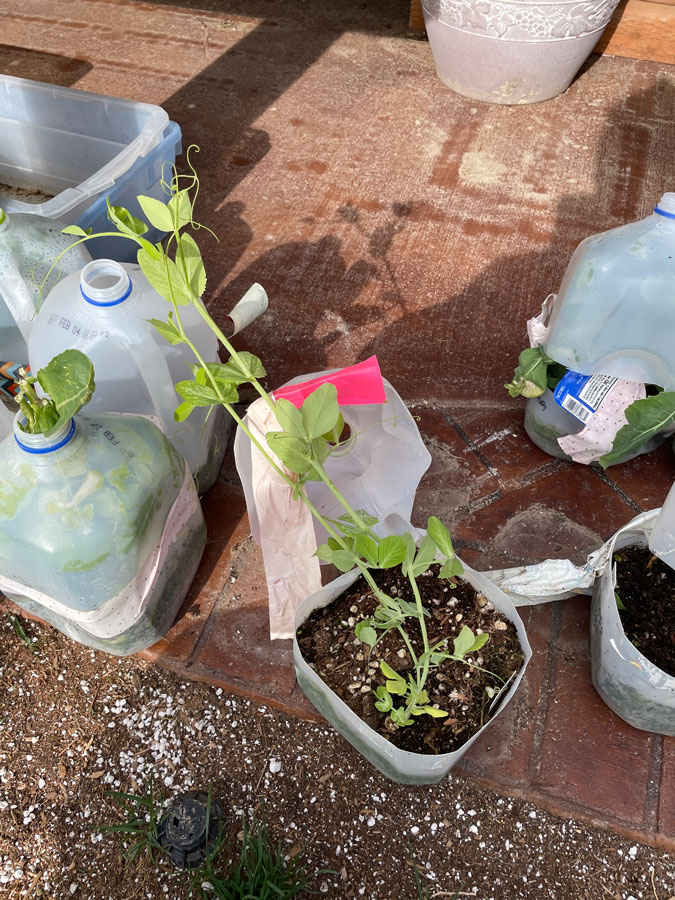
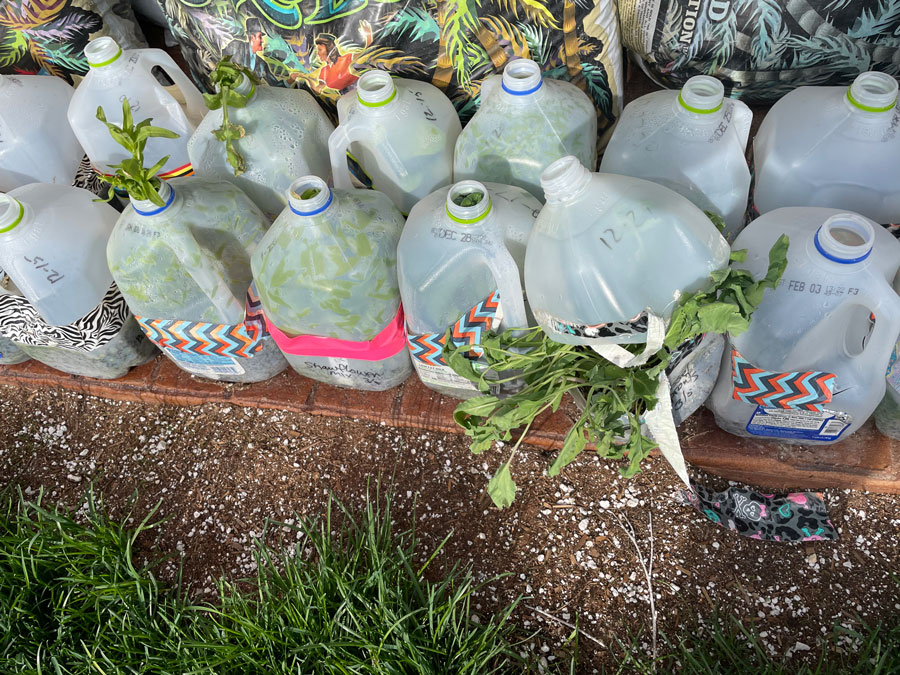
Usually sometime in April, the seedlings start to grow and these plants will not have to go through the process of “hardening off,” which is where a gardener exposes the seedlings little by little to the elements. Winter sown seedlings are already exposed and ready to plant anytime after the last frost, usually after Memorial Day in Sweetwater County, she said.
Winter sowing can be as big or small of a project as a gardener wants. It all depends on what they want to get started. Schmid-Pizzato ended up with 77 plastic jugs last year.
As for what types of seeds to sow. It’s up to trial and error to see which ones do well and which ones don’t. Schmid-Pizzato said she’s had success in sowing vegetables and herbs, including Brussels Sprouts, pumpkins, lettuce, beans, cabbage, broccoli, cauliflower, squash, basil, spinach, oregano, lemon balm, parsley, sage, lavender, thyme and dill. She also plants a lot of flowers as well including cosmos, rudbeckia, sunflowers, snap dragons, and anything else she wants to try. One suggestion she had was to make sure the seeds are for zone 5, which is what most of Rock Springs is in.
While some seeds do well with this process others do not. She said do not try this with any bulb plants or any root vegetables, such as carrots, radishes or beets.
For more tips, or to watch Schmid-Pizzatos entire winter seed-sowing video, visit the Sweetwater County Master Gardeners Facebook page.