
GREEN RIVER — The Green River City Council on Tuesday heard a detailed presentation from NewGen Strategies & Solutions on a proposed water and wastewater treatment rate analysis, which could result in a $27 per month bill increase by 2030 for residents.
NewGen President Dave Yanke and Senior Consultant Savanna Page presented findings from the firm’s cost-of-service study, which incorporated the city’s five-year capital improvement project (CIP) plan into future rate projections.
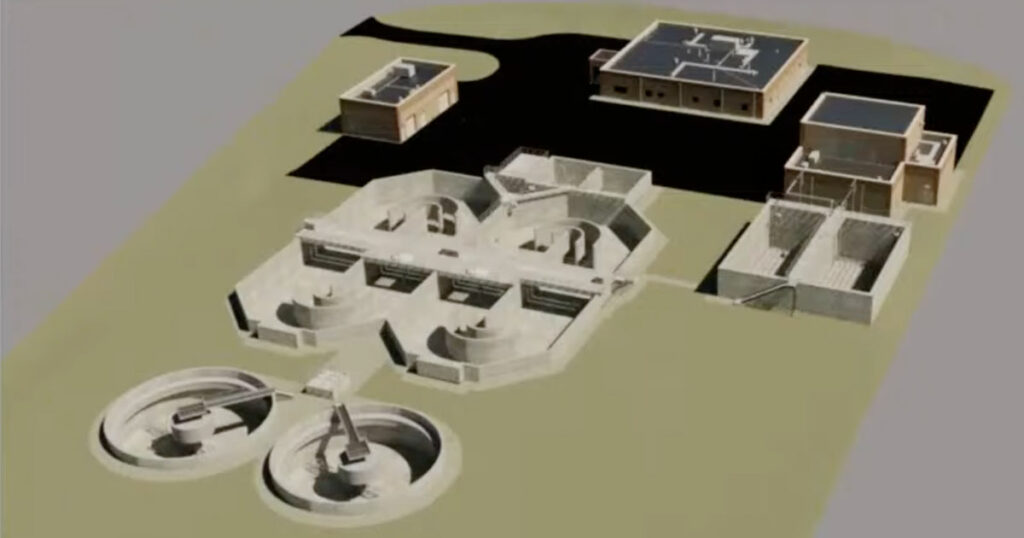
According to the study, the city is projected to need $795,000 in 2026 to fund a combination of pay-as-you-go infrastructure upgrades, proposed debt service, and water reserve funding. However, required funding is expected to spike dramatically in 2027 to more than $43.9 million, largely due to debt financing for a new wastewater treatment facility.
Additional projected debt includes $4 million in 2028 and just over $3.4 million in 2029. Required capital outlay then falls sharply, with 2028 projections at $5.2 million and 2029 at $4.45 million. By 2030, the city expects to need only $1.07 million in capital funding, signaling a downward trend in investment costs.
The total capital improvement plan cost is estimated at more than $55.5 million, with approximately $50.5 million of that amount funded through debt. Major projects include $40 million for the construction of the wastewater treatment plant and $4 million for lagoon sludge disposal. Other key infrastructure upgrades include $3 million for Teton Water Tank rehabilitation and $3.4 million for Upland Water Tank rehab.
Current Rates
Currently, residential water customers pay a base rate of $26 per month for a ¾-inch meter, with a volumetric rate of $0.024 per cubic foot. Wastewater customers pay a $25.80 base fee and $0.059 per cubic foot.
Under the current rate structure, the city is projected to have a surplus of $577,476 in fiscal year 2026. However, beginning in FY 2027, the city would fall into a water/waste water revenue shortfall, including a projected deficit of $858,476 in 2027, $1,085,641 under in FY 2028, $990,847 under in FY 2029, and $ $1,115,186 in FY 30. Over the five-year period, the city would fall $3.4 million short of its revenue needs for water and wastewater without rate adjustments.
Proposed Rate Adjustments
NewGen recommended a series of gradual rate increases to address the revenue gap:
Water Rates:
- A $1 base rate increase each year beginning in 2027, rising from $26 to $30 by FY 2030.
- An annual 7% increase in the volumetric rate beginning in FY 27, increasing from $0.024 per cubic foot in 2026 to $0.031 in 2030.
Wastewater Rates:
- A $3 annual increase in the base wastewater fee from 2027 to 2029, rising from $25.80 in 2026 to $34.80 in 2030.
- An 18% volumetric increase in 2027, followed by a 10% increase in 2028 and a 5% increase in 2029, taking the per-cubic-foot rate from $0.059 to $0.08 by 2030 for a 31% total increase.
If implemented, the proposed rate changes would still result in a slight shortfall in the early years—$344,600 under in 2027 and $185,459 under in 2028—but would bring the city into the black by 2029 with a $187,430 surplus, and $57,257 in 2030. The five-year net revenue would show a cumulative surplus of $292,104.
Average residential water bills are projected to rise from $33.72 in 2026 to $39.59 in 2030, a 4% annual increase. Wastewater bills would increase from $59.73 to $81.04 over the same period.
City officials said they plan to schedule additional workshops to further discuss the study at a date to be determined.