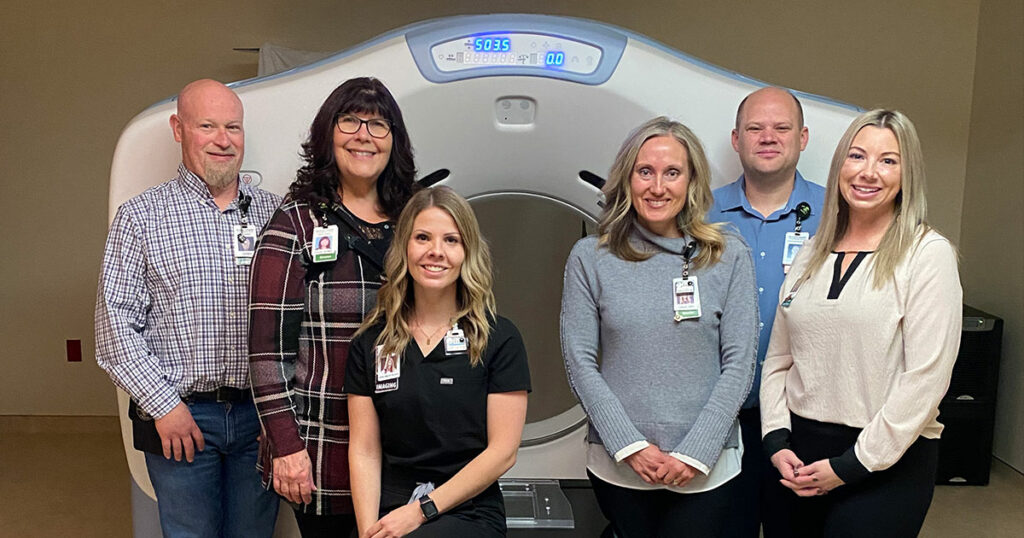

ROCK SPRINGS — Memorial Hospital of Sweetwater County will add a dual-purpose PET-CT simulator to its imaging fleet with the help of a $1.9 million grant from The Leona M. and Harry B. Helmsley Charitable Trust.
“Having a PET-CT scanner on site will improve diagnostic and treatment services and expand access to advanced imaging,” CEO Irene Richardson said. “It will enhance patient care across multiple specialties.”
“We are deeply appreciative of the grant from The Leona M. and Harry B. Helmsley Charitable Trust. It will make a remarkable difference in the lives of rural patients,” Richardson said. “We also are thankful for the Memorial Hospital Foundation for reaching out and helping to secure this funding.”
The Helmsley Charitable Trust has invested $128 million to ensure access and expand chemotherapy and radiation services in rural communities, including a previous grant to MHSC to purchase a linear accelerator.
“At Helmsley, we’re committed to bringing cutting-edge tools to rural communities so patients can get the right care at the right time,” Walter Panzirer, a Trustee of the Helmsley Charitable Trust said. “This new PET-CT scanner will strengthen Sweetwater County’s capacity to diagnose and treat cancer locally, improving patient experience and long-term health outcomes.”
Sweetwater Memorial and its Sweetwater Regional Cancer Center will no longer be reliant on mobile PET-CT imaging, which now visits the hospital every other week, Shelynn Edwards, MHSC Nuclear Medicine Technologist said. Onsite services will allow for streamlined diagnostics and support timely, coordinated care for a better patient experience.
“This grant will allow MHSC to increase access to PET-CT imaging, help reduce patient wait times, improve treatment accuracy, and enhance patient satisfaction,” said Tasha Harris, Cancer Center Radiation Oncology Director. “The project will support earlier diagnosis and better care coordination, ultimately improving cancer care outcomes.”
PET-CT imaging is used for cancer detection, staging, and treatment monitoring, Harris explained. Relying on a mobile PET-CT delays diagnosis, complicates treatment planning and at times forces patients to travel hundreds of miles to urban centers for PET-CT studies. These types of barriers disproportionately impact rural residents, while increasing stress, costs, and health disparities.
Installing this equipment will strengthen the hospital’s role as a regional healthcare hub.
“This grant represents a powerful investment in community health,” Kayla Mannikko, Foundation Executive Director said. “By bringing together partners across healthcare, we’re building a stronger, more equitable system of care that truly meets people where they are. The generous Helmsley grant will help to ensure timely, accurate, and patient-centered care locally.”
The Cancer Center’s current CT simulator room will be repurposed to house the new piece of equipment. It is possible the new PET-CT could be in place and available to patients by late 2026. “It’s difficult to give a date at this point,” MHSC Facilities Director Gerry Johnston said. “We are in the beginning stages. We’ll have a better idea on a timeline once we have all the pieces of this project in place.”