
ROCK SPRINGS – While voices calling for a special legislative session continue to grow; local legislators are considering which way they will side in a vote determining if that session will take place.
High School at Risk
Speaking to TRN Media’s Al Harris on his “Let’s Talk” public affairs program Thursday, Sen. Stacy Jones, R-Rock Springs, expressed fears funding for a new Rock Springs High School could be stripped if a special session takes place. Legislators are voting on if a special session will happen, with the deadline for that vote being Sunday. If the special session does occur, everything is back on the table unless special rules are enacted.
“I am so worried that our high school for Rock Springs is going to come back up,” she said. “It was so close before. We lost it on the Senate floor when it was a stand-alone bill.”
One of the last-minute victories of the budget session was the addition of $150 million to build a new Rock Springs High School. According to the district, the current building has been overcrowded since the late 2000s and the district has released a wealth of information supporting claims that the building needs significant and costly repairs and that it has outlived its usefulness as a high school.
Jones said she is undecided if she supports the special session or not and has until Sunday to make a decision.
“I am so worried that our high school for Rock Springs is going to come back up. It was so close before. We lost it on the Senate floor when it was a stand-alone bill.”
Sen. Stacy Jones, R-Rock Springs
Calling for the Session Vote
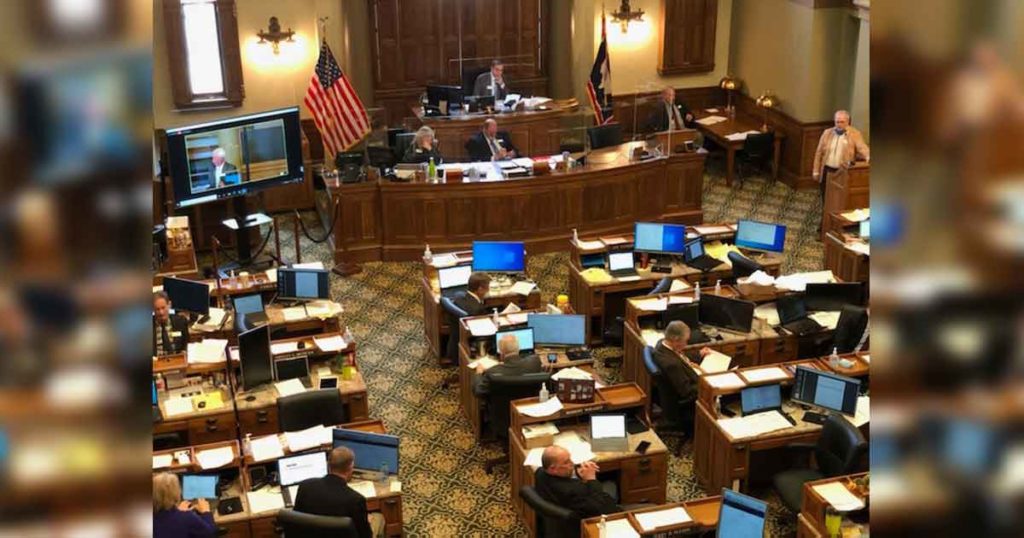
Thirty five percent of the Senate was needed to call for the vote, which Jones said she was not a part of. While that threshold was met, the Senate and House leadership have independently called for legislators to vote on the special session, which will require a simple majority to pass.
There has been some flip-flopping over if a special session is needed or not, with the Senate President Ogden Driskill, R-Devils Tower, and Speaker of the House Albert Sommers, R-Pinedale, initially releasing a statement saying the session wasn’t needed. However, they later said they would examine the issue after information from the Wyoming Department of Revenue regarding the vetoed Senate File 54, which would provide a 25% exemption off the fair-market value of a home, caused them to think twice about their stance. The two later said they would only support a special session if it solely focused on property tax relief.
The two legislative bodies would need to have two-thirds of its membership agree on special rules to limit the scope of the session. During the previous special sessions in 2020 and 2021, special rules were approved to only have the legislature deal with federal CARES Act funding in 2020, and COVID-19 mandates in 2021. Without that vote, everything would be on the table.
While Jones is undecided, other local legislators have already made up their minds. Rep. Tony Niemiec previously told SweetwaterNOW he opposes a special session because both houses drug their feet on issues, saying legislators mired the budget process with political grandstanding and expects much of the same if a special session is called.
Rep. Clark Stith, R-Rock Springs also said he isn’t in favor of a special session, saying one of his favorite aspects of the legislature he is proud of is the fact that it is a citizen legislature. He believes it isn’t practical to have legislators take another few weeks of work off to revisit bills that were vetoed by Gov. Mark Gordon. While he admits revisiting Senate File 54 would be a good idea, he thinks the issue can wait for the 2025 session.
Stith agrees with Niemiec’s view that grandstanding and purposeful delays ate into the time, saying the Freedom Caucus was behind the delays through requests for roll call votes on issues that had wide support and filibustering bills the group did not agree with. Stith said Sommers had front loaded the House’s schedule to allow representatives a chance to finish their budget work early, however much of that time was taken up by Freedom Caucus political maneuvers. Despite the work the legislature accomplished, much of which he said he is happy with, Stith thinks Freedom Caucus members would use the session as an opportunity to re-introduce other vetoed bills for consideration, including an abortion bill and a bill centered on eliminating gun-free zones.
Support for the Session
However, there is one local legislator who thinks the session is needed: Sen. John Kolb, R-Rock Springs. Kolb said he had already voted in favor of the session, saying he views it as a way of standing up to Gordon’s use of his veto powers. Kolb said he has already submitted his vote in favor of the session and thinks it should be limited to only the bills that were vetoed by Gordon.
“These are the bills the governor vetoed because he could,” Kolb said.
Kolb believes comments Gordon made in his veto letters were unfounded and took personal issue with a comment made about the legislature being socialists in his veto letter for Senate File 54.
“Such a wealth redistribution scheme would be a socialist-type of wealth transfer, mostly from the energy sector, to Wyoming homeowners. The Bidenomic-type of ‘tax relief’ in this bill is what I would expect from Washington, D.C. liberals, not conservative Wyoming legislators,” Gordon wrote in his Senate File 54 veto letter.
Overall, Kolb doesn’t believe Gordon has worked with the legislature in good faith views the session as one of the few options the legislature has available.
Kolb said the bills initially passed the legislature with veto-proof numbers and views them as bills most Wyoming residents want enacted. He also believes a special session could take three days if legislators agreed to an expedited process. The three days are the number of legislative days the legislature had remaining when the session adjourned. Kolb believes the vetoed bills could be reintroduced on one day and voted on by the legislative bodies. The passed bills would be again sent to the governor’s desk and if he vetoes them a second time, Kolb believes the legislature would still be in session to override those vetoes with a two-thirds majority vote in the legislature.
Kolb is sure what will come of the vote for a special session, but he believes the vote will be close, possibly with one or two votes deciding the question.
These are the bills the governor vetoed because he could.
Sen. John Kolb, R-Rock Springs