
SWEETWATER COUNTY — Thanksgiving is less than three days away, and time is running out to thaw it safely, according to Butterball Turkey talk-line supervisor Jessica Romanowski.
Romanowski said there are only two ways of safely thawing a turkey: the refrigerator method or the cold water method. She said a 16 pound turkey needs about four days of thawing out in the refrigerator, about 24 hours for every four pounds of turkey. The cold water method takes 30 minutes per pound, with the water changed every 30 minutes. This method thaws a 16-pound bird in about eight hours.
“Those are the only food-safe ways to thaw a turkey,” Romanoswki said. Hot water thawing is not safe.
She said cooks should leave the turkey in its package while it thaws. While in the refrigerator, she recommends setting the bird on a tray with paper towels underneath in case juices leak out.
Romanoswi does not recommend cooking a turkey from a fully frozen state, unless it is a product that was made for that. Cooking a partially frozen bird is also not recommended. She said that the outside cooks before the inside reaches a safe temperature, which extends the cooking time and can dry out the meat.
She said she recommends buying a fresh turkey for cooks who forgot to thaw theirs out before Thanksgiving. She said Butterball offers a deep chilled, not frozen, turkey for just this occasion. She suggested placing the turkey in cold water for an hour or two to take the chill off before it goes in the oven.
Cooking Methods and Family Traditions
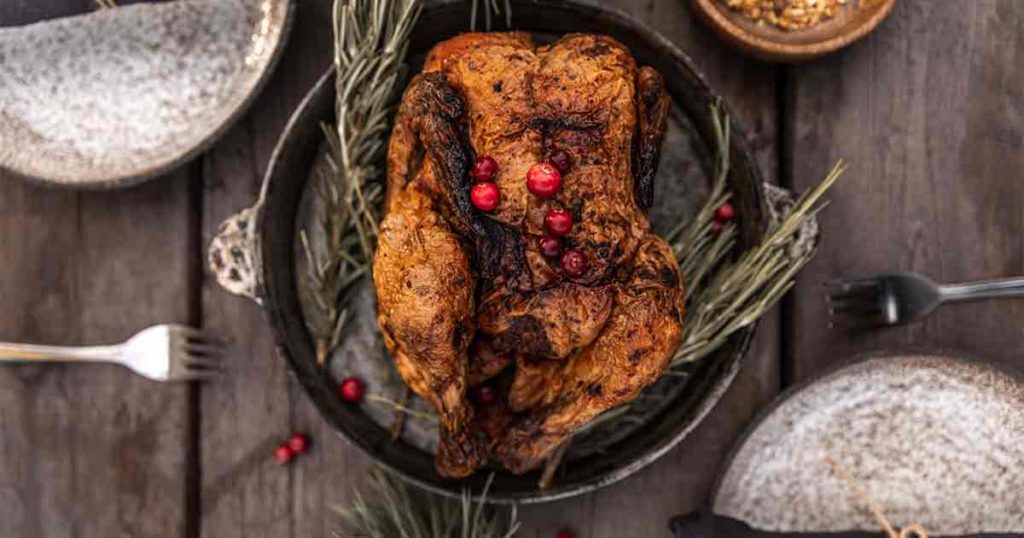
Romanoswi said the preferred cooking method is the oven with a shallow, open pan at 325 degrees with a thin coat of avocado or vegetable oil. The turkey should sit on a flat rack, or in lieu of one, a coiled long strip of crinkled foil to lift the bird off the bottom of the pan, allowing even cooking on every side.
An unstuffed 16-pound turkey takes roughly three to three and a half hours. She said cooks should check the deepest part of the breast and the thigh, without touching bone, on both sides of the bird.
Romanowski said turkey cooking times do not change until about 10,000 feet. At that point the adjustment is a longer cook time, not a different temperature.
Romanowski said cooks should not rinse a turkey because it raises the risk of cross-contamination in the kitchen. Butterball turkeys are rinsed before packaging, and she recommends patting the bird dry with paper towels.
Romanowski said an incompletely thawed turkey is the worst candidate for deep frying because ice crystals dropped into hot oil cause it to bubble over. Cooks should turn off the burner before slowly lowering the bird into the oil. If oil spills onto a lit flame, she said, call the fire department. The Turkey Talk Line can walk callers through deep frying safety steps.
The Turkey Talk Line fields questions about all kinds of turkey methods, including some that are not Butterball-approved. Romanowski recalled a call last year from college students who stayed on campus for Thanksgiving instead of going home. They wanted her to settle a debate over whether to cover a turkey in mayonnaise before roasting it. She did not realize until the end of the call that she was on speaker.
The Butterball way is a light coat of oil for golden-brown skin, she said, but she did not dismiss the idea. She asked the students whether they had ever had a grilled cheese made with mayonnaise instead of butter. It is tasty, she said, and she understands why people would try it on a turkey.
“I’m not knocking people’s family traditions,” Romanowski said, “because everyone’s family does things differently.”
When asked what her biggest tip for the holiday was, Romanowski said, “turkey should be the easiest part of your meal.” She encouraged guests to offer help before the host needs it, wash dishes, whipping counters down and serving drinks to other guests can ease the burden of hosting.