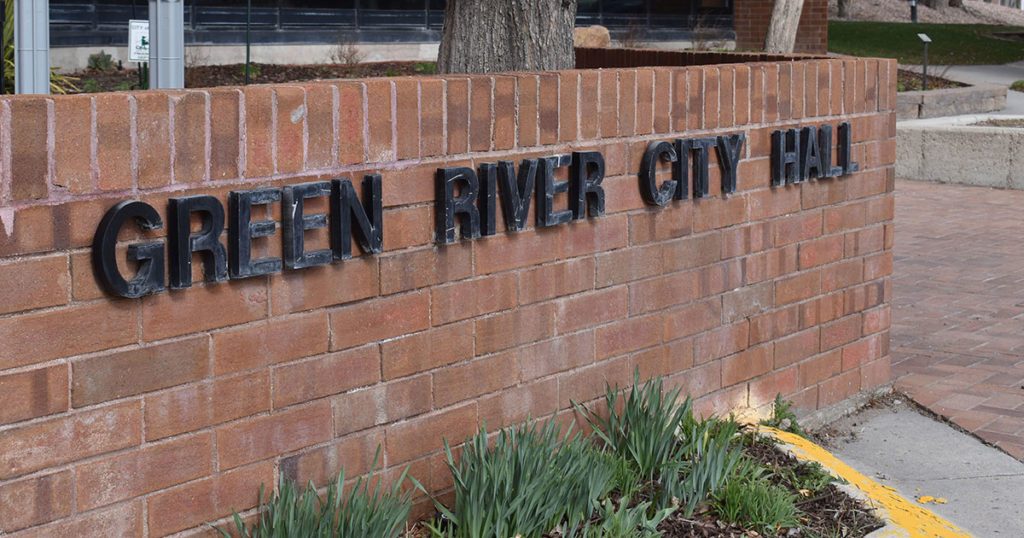

GREEN RIVER — The Green River City Council voted 5-1 Tuesday night to adopt a budget for fiscal year 2027, a spending plan that draws on reserves to cover a projected gap of $4.24 million between revenues and expenditures.
To cover the gap between revenues and expenditures, the city will draw on its fiscal year 2026 ending fund balance of $14.47 million, leaving $10.23 million to be divided between restricted and unrestricted funds. The total restricted fund balance for fiscal year 2027 is projected at $10.17 million, leaving the city with just $60,687 in unrestricted funds.
Councilman Ron Williams was the lone dissenting vote.
Expenditures outpace revenues
General fund revenues are projected at $17.56 million for FY2027 and expenditures are projected to be at $20.72 million.
Sales tax remains the dominant revenue source at $11.1 million, flat from the FY26 budget. City Administrator Reed Clevenger said the city is taking a conservative approach to sales tax projections.
“We continued to move the conservative revenue approach on the sales tax,” Clevenger told the council. “We are seeing it as being flat.”
To cover the deficit, the city has started to dip into its savings.
Dipping into the savings
To balance the budget, the city withdrew approximately $400,000 from designated sinking funds. Clevenger said all withdrawals were limited to one-time expenditures.
The withdrawals included $175,000 from the land use fund for cemetery design and engineering. The Green River Cemetery expansion is estimated to cost $5 million total, and Clevenger said the city needs to begin the planning process.
“We need to at least get that first part of it started,” Clevenger said.
The city also withdrew $40,000 from the Recreation Center fund for deferred maintenance, including emergency driveways, lobby furniture, changing room doors, and pool covers. An additional $61,000 came from the fire equipment fund for bunker gear to outfit three recently added firefighters, and $100,000 was pulled from reserves for Police Department vehicle leases.
Meats said the city added to one sinking fund this year, a reserve for fire department truck purchases funded by revenue the city collects from Sweetwater County for providing fire services on the eastern side of the county.
A thin cushion
After accounting for transfers and reserve designations, the estimated unreserved, unrestricted ending General Fund balance is $60,687.
City Finance Director Chris Meats said the number, while thin, is within the range the city has navigated before.
“We’ve been down to like $1,400 here,” Meats said after the meeting.
Meats said the city runs a deliberately conservative budget and monitors the balance closely throughout the year, noting that unspent personnel dollars and delayed hiring often provide a cushion that the budget document does not reflect.
“We don’t underestimate expenditures so they’re way high, we don’t overestimate revenues,” he said. “We watch this really close. Department heads know that’s what they’ve got to hit. If we get halfway through the year and things aren’t looking good, we start talking.”
Clevenger echoed that, saying carryover savings within departments have historically helped bridge the gap between budgeted and actual year-end balances.
Long term consequences
Clevenger told the council the city received more than $25 million in departmental budget requests for FY27, the vast majority of which could not be funded. He said the city is working on a 15-year capital plan to be completed in the first quarter of FY27 that will map deferred maintenance needs across all city facilities and infrastructure.
Clevenger said inflation-adjusted revenues have failed to keep pace with rising operating costs and infrastructure needs, while cities statewide have seen reductions in several state-shared revenue streams.
He warned that without renewal of the 6th Penny sales tax or new revenue sources, the council may face difficult decisions about service levels as soon as FY29.
“In order to move the city forward on some of the things that are going to have to happen, by fiscal year 29, it’s going to have to be a hard look at what services the council would like to have,” Clevenger said.
Meats pointed to aging infrastructure across city facilities as a growing pressure, noting that City Hall has had little investment beyond a new roof and boiler in 25 years, and that the Recreation Center and Public Works building face similar deferred maintenance burdens.