
ROCK SPRINGS — The Treatment Court of Sweetwater County continues to see clients successfully graduate from the program and become contributing members of society.
During a recent Rock Springs City Council meeting, the Council heard from a couple of treatment court graduates and those who work closely with the program.
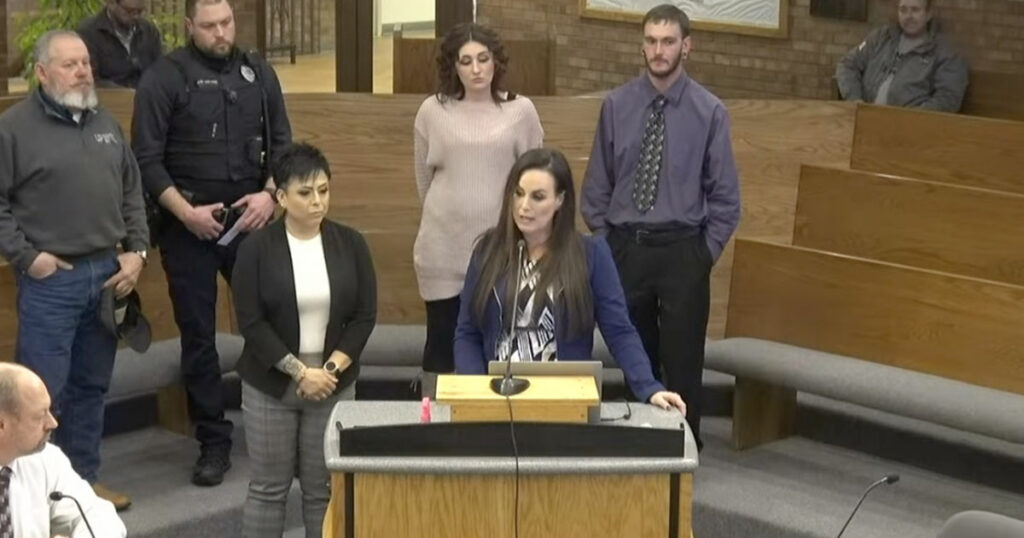
Augusta Clayton Davis, Treatment Court of Sweetwater County coordinator, said the nonprofit program provides services for nonviolent offenders and gives them tools to address substance-abuse disorders while providing treatment and a support system. Those in the program are intensely supervised throughout the process.
A team of 12, including law enforcement officers and a judge, work together to create the best intervention plan for each client, Clayton Davis said. They not only address the substance abuse disorder, but the behavior leading to it.
The program reduces recidivism by 45 percent and 75 percent of all treatment court graduates remain arrest free compared to only 30 percent of those who are released from the state prison, according to Clayton Davis.
“Someone attending treatment court instead of the state prison can save up to $13,000 per participant,” Clayton Davis said.
Last year, 38 clients were in the program. Clients in the program are required to maintain a full-time job, follow curfews, obtain their GED of HiSET, attend a financial management class, complete a health and wellness course, and attend treatment. They also have career development classes and parenting courses available to them.
“The support from the City of Rock Springs changes lives and is changing our community for the better,” Clayton Davis said. “We really appreciate the strong support we get from the City of Rock Springs.”
The Clients
Who better to describe the program, than those who successfully completed it.
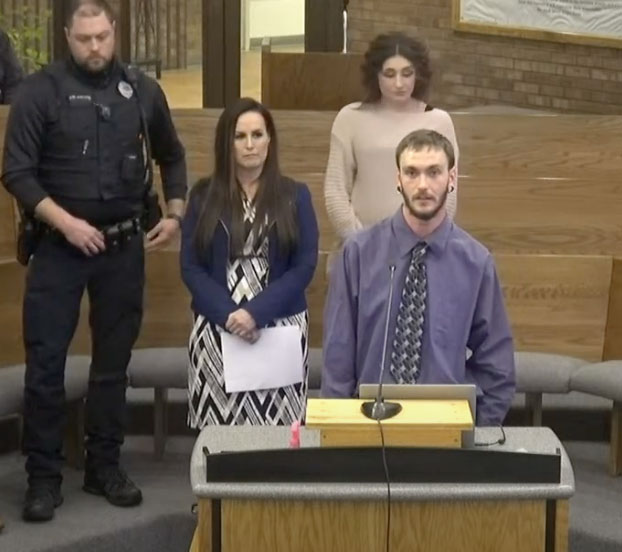
Treatment court graduate, Nathaniel Dulin said he spent 22 months in the treatment court program. At first, he was reluctant to rely on the help.
“I too fought the program. When I first came into it, I didn’t want to do it,” he said.
After being sentenced to an in-patient program, he fought that program as well and didn’t want to change. However, he soon realized the only person he was hurting by not changing was himself. Without having a schedule and needing to be responsible, Dulin believes he wouldn’t have developed a successful lifestyle. He has learned how to pay his own bills, has become a better father, and obtained his GED.
“The treatment court program has done so much,” he said. “They gave me the pathway to do it.”
Dulin has taken financial and parenting classes, and for the first time in his life he’s been able create and stick to a budget. Something he’s really proud of. Dulin spoke highly of the program and how it helped him change his life for the better.
Another graduate echoed what he said.
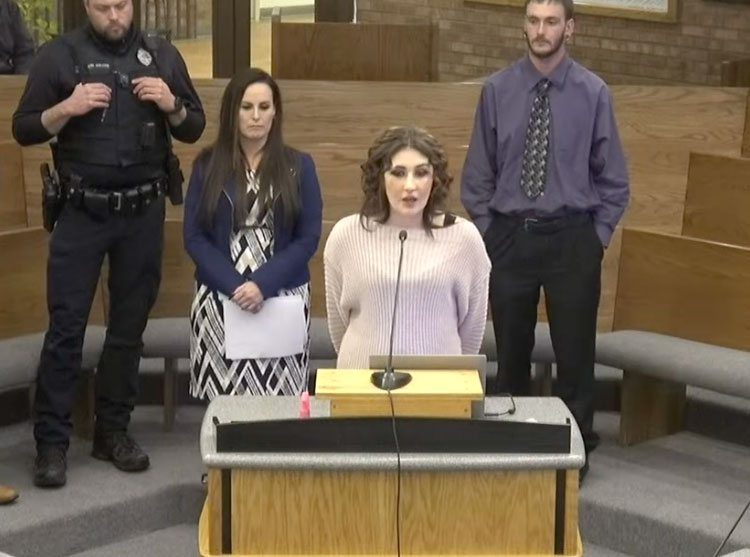
Morgan Bauer, a treatment court graduate and recovering addict, said the staff at the treatment court saved her life.
They did for me what I could not do for myself. They saved me from endangering my children and bringing my children into a world that they do not need to be in.
~ Morgan Bauer
Bauer admits that at first she “was standoffish of the program” and she didn’t want to accept any help because she thought she could do it on her own. However, after attending counseling she quickly discovered the employees at treatment court only wanted to help her. She said all of the employees at treatment court were ready to give her the support and advice she needed.
Even though Bauer graduated from the program about two years ago, she still talks to treatment court employees.
“Without them I would not be standing here today and so for that I am truly grateful,” Bauer said.
As for the law enforcement aspect of the program, Rock Springs Police Department Det. Cpl. Michael Nielson was also at the meeting to speak to the success of the program.
Nielson, who is also the City of Rock Springs’ treatment court representative, said he was able to get some of those who were arrested by the RSPD into the treatment program.
“They were able to help these clients become successful members of society again rather than going the route of incarceration,” Nielson said.
“It helps provide life skills to individuals who may not have been taught those as individuals growing up,” he said. “It provides opportunities and some of those are as simple as education.”
They also help get clients to doctor’s appointments, helping them get driver’s licenses.
“It’s a top notch program and run very efficiently,” he said.
With the program’s continued success, the group is looking at ways to expand it. In the future, Clayton Davis would like to provide services to those who have received their second or third driving under the influence charge instead of waiting until they have a felony DUI charge. She said the community has an alcoholism problem as well and she’d like to see the program help in that area too. For now, the the group will continue what it does best, which is helping those who sometimes can’t or won’t help themselves.