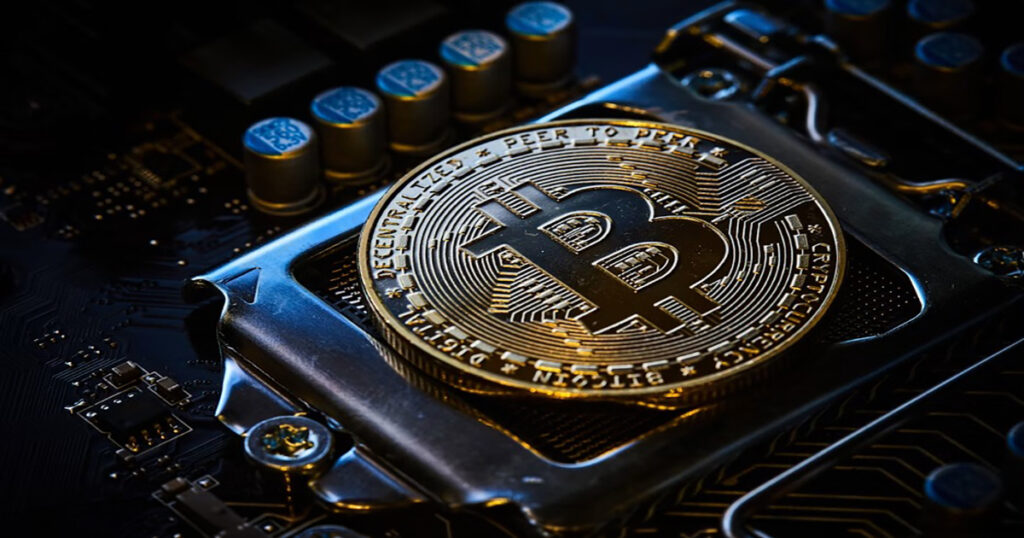

Rarely does the public get to see what happens inside Bitcoin mining operations. The spotlight is usually on the big computational machines, the energy-consuming devices, and the miners’ wallets. Nonetheless, mining Bitcoin really is just part one of the whole chain of events.
In fact, it gets more interesting after a mined Bitcoin is released into the market. That is when the digital currency can be transferred between various players in the growing digital economy, including wallets, exchanges, merchants, investment platforms, gaming services, and many other online businesses, to name a few. To understand how Bitcoin has transformed from a technological experiment into an asset that can be transferred over the internet, you need to follow its journey.
Mining and Moving on to the Crypto Market
Upon getting newly minted Bitcoin(s) as their reward, miners may choose what they need to do with them. Options include storing them for later use. Alternatively, they can transfer them to various wallets, exchange them for another currency, or spend Bitcoin as payment for online digital goods and services.
Bitcoin moves between parties as a means of payment, connecting Bitcoin mining to the larger crypto economy.
A great example of cryptocurrency used beyond transactions is mbitcasino.io, since this platform shows that, beyond being coins or money, cryptocurrency can enable interaction between a person’s wallet and a virtual entertainment platform. It shows how a piece of Bitcoin can change once it leaves a miner’s hands. Rather than sitting idle in a wallet, it can become an intermediary in moving value through digital services, where cryptocurrency payments are just one part of the overall user experience.
With more platforms developing digital currency payment systems, Bitcoin will soon become an integral part of a more integrated online marketplace.
Bitcoin is usually stored in a wallet
For Bitcoin to be traded or spent, you need a place for these operations to occur. Enter cryptocurrency wallets.
Through a Bitcoin wallet, a person can manage access and transfer instructions for their Bitcoin. Methods include computer- and phone-based software wallets, as well as dedicated physical crypto storage devices.
Once Bitcoin reaches a wallet, the owner can decide what happens next. Possible scenarios are:
- Keeping the Bitcoin as a digital asset,
- Giving it to a person,
- Moving it to a marketplace.
- Buying goods or services for a fee in Bitcoin,
- Transferring one’s Bitcoin to various digital platforms,
All of these transfers ultimately contribute to Bitcoin’s wider network activity.
Crypto Exchanges Provide An Avenue For Bitcoin To Be Exchanged For Other Currencies
Users trade cryptocurrency at exchanges, which they can use to transfer between digital currencies or even traditional fiat currencies. Mainly, these trading platforms link different parts of the crypto community.
For example, a miner could deposit Bitcoin for their share of the reward into an exchange and convert it into US dollars, euros, and so on. In contrast, the opposite could happen: someone could sell Bitcoin and receive the funds into their own wallet after the exchange.
This constant cycle of transactions creates an active market, with Bitcoin as the vehicle between various roles and entities in the system, such as miners, investors, traders, business entities, and the general population.
Bitcoin Can Be A Means of Payment
One of the most important factors for the development of the cryptocurrency economy is that more and more businesses are accepting Bitcoin as a form of payment.
Sometimes, instead of converting Bitcoin to traditional money first, you can remit it directly to a business or digital service. This path is pretty much linear:
Mining → wallet → payment → merchant or platform
This example highlights one of Bitcoin’s unique attributes. A system for the direct transfer of digital value is the primary purpose for which it was made to work.
These days, the payment of Bitcoin has become available among various sectors and industries – technology, online entertainment, hosting, travel, e-commerce, and other internet-based products and services.
There Are More Venues Where the Movement of Cryptocurrency Can Happen
Beyond trading and investment, the crypto economy now includes payment solutions, online marketplaces, apps, games, financial instruments, and even recurring subscription services that interact with cryptocurrency in one way or another.
This variety of options makes up the ecosystem where Bitcoin can circulate. For example, a Bitcoin mined by a group of volunteers could eventually be traded, bought by another user, stored on someone’s phone, used as an online payment, and finally accepted by another business as payment before resting in the owner’s wallet.
Bitcoin doesn’t stop moving just because it was created through mining. Mining basically puts the coin in circulation.
Crypto Economy Expansion
In fact, beyond mining, miners’ new bitcoins find new homes through wallet transactions, marketplace trades, etc.
One might imagine the crypto space as being a puzzle, where all pieces work together through a common network of the ledger that is a blockchain for each piece.
So, from what was a simple new way of digitally transferring assets, it has now grown to encompass a much broader set of industries and services where digital assets can move: from mining operations through personal wallets, then the international markets, online payments, and the entertainment industry, all being a single and integrated virtual network.
This fact about Bitcoin could become the most exciting part of a story for curious eyes in cryptocurrency.
Mining isn’t what happens; it is when it happens. Mining is just one more starting point on the journey of the coin.