
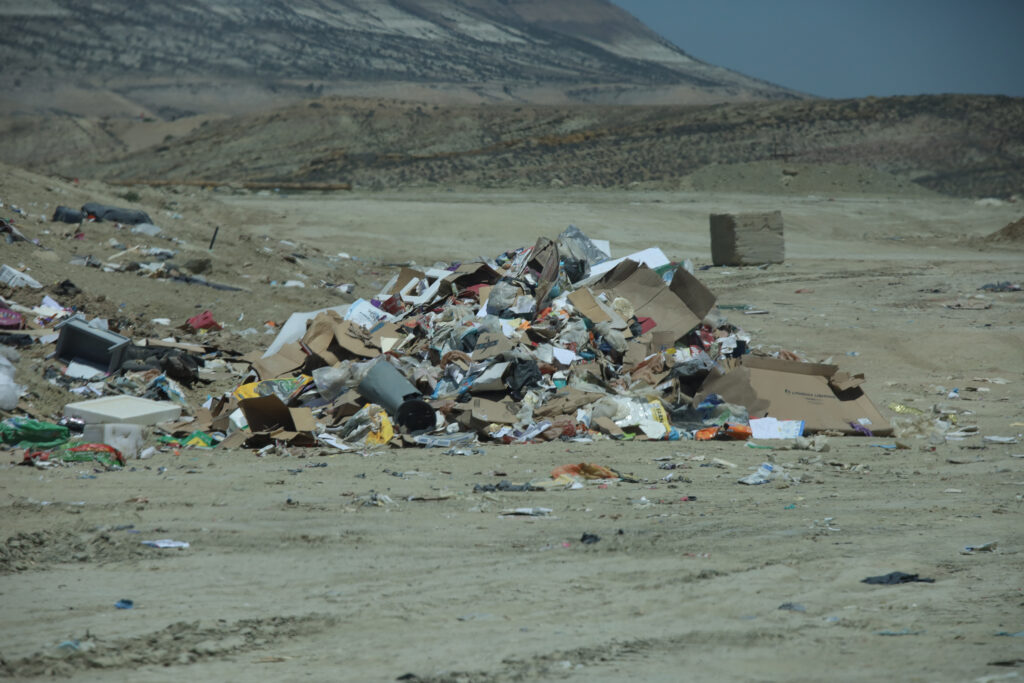
ROCK SPRINGS — The Sweetwater County Solid Waste Disposal District No. 1 landfill is more than a place to throw things away. It is a feat of engineering that most people never think about until they see it up close.
General Manager Dan Chetterbock laid out the facility’s operations, challenges and long-term vision during a recent open house at the Rock Springs landfill, describing a site that handles roughly 60,000 tons of waste per year and is racing to stretch every cubic yard of available space.
“When you go to design a city, the last thing you would probably think about is where are we going to put our waste,” Chetterbock said. “But that’s the biggest problem a landfill solves.”
The average American produces 2,098 pounds of waste per year, meaning a household of four generates roughly four tons of trash annually.
The engineering
Modern landfill cells bear little resemblance to the simple trenches dug on the site beginning in 1977. Today’s cells start with a base layer, followed by a geosynthetic clay liner, two layers of 60-mil high-density polyethylene plastic and a drainage net, all before waste ever enters the ground.
The engineering is designed to contain leachate, or “trash juice”, the liquid that filters through compacted trash and poses a contamination risk to groundwater.
“This is what comes out of your trash,” Chetterbock said, holding up a sample jar collected from the site’s test ports. “When we compact our trash, that falls through the drainage net, gets to the liner, and then we pump it into a leachate pond.”
The district’s most recently completed cell cost $3.8 million to construct and reaches about 33 feet at its deepest point. Future cells are projected to cost $5 million to $6 million due to inflation.
Airspace is the name of the game
The landfill’s most valuable commodity is not land. It is airspace, the volume available to accept waste.
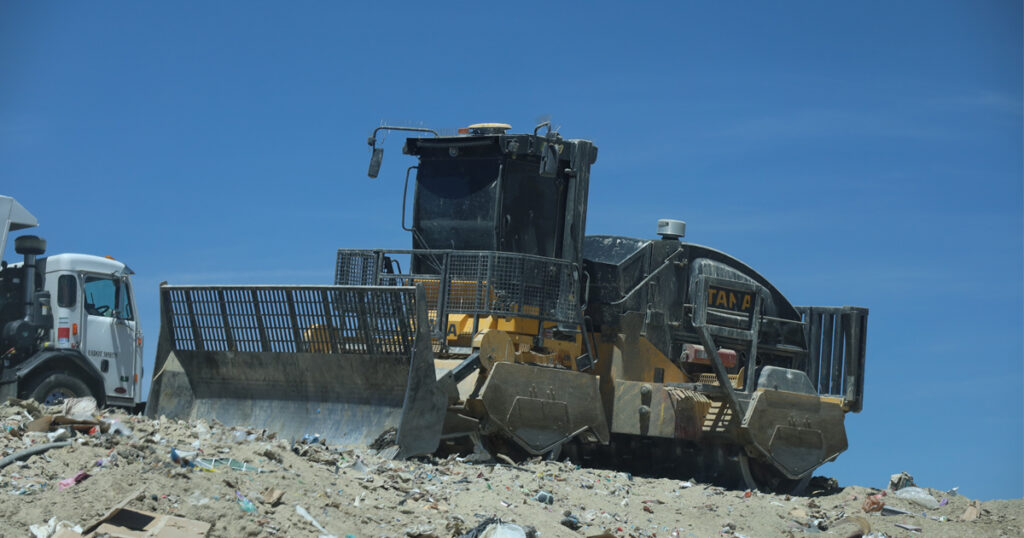
The district recently put into service a purpose-built single-drum Tana compactor weighing 98,000 pounds, paired with GPS technology that monitors compaction density in real time. The target is 1,100 pounds per cubic yard. Last month, operators averaged 1,500 pounds per cubic yard.
By switching to a “pancake” compaction style, pushing waste flat in successive three-foot lifts rather than compacting on slopes, and using tarps as alternative daily cover instead of the six inches of dirt Wyoming Department of Environmental Quality regulations would otherwise require each day, the facility has extended its current cell’s life by nearly a year and two months beyond projections.
“The GPS has already paid for itself in airspace value,” Chetterbock said.

Diversion Programs
A waste composition study conducted in December and again this past May found that 24% of the district’s waste stream is food waste and 18% is cardboard and paper, both divertible materials.
“Every five years, if we’re able to divert 50%, we could add a year of life to the landfill,” Chetterbock said. “It makes a huge difference.”
Current diversion programs include mattress recycling, launched in October 2025 in partnership with a recycling center in Salt Lake City, which recycles mattresses at about 98% efficiency, converting foam into carpet padding and steel wire into fencing material. The program ships 250 to 350 mattresses per month and has already saved 19 days of airspace, far exceeding initial projections.
Other diverted materials include household hazardous waste, metals, concrete, asphalt and green waste composted on site. The district also receives biosolids from Rock Springs’ wastewater treatment plant, mixing them into compost available free to district residents.
Officials are also in early conversations about absorbing the Rock Springs Recycling Center under the district’s umbrella, potentially building a new on-site single-stream facility modeled after one Chetterbock toured in Nebraska.
Tiresome problems with batteries
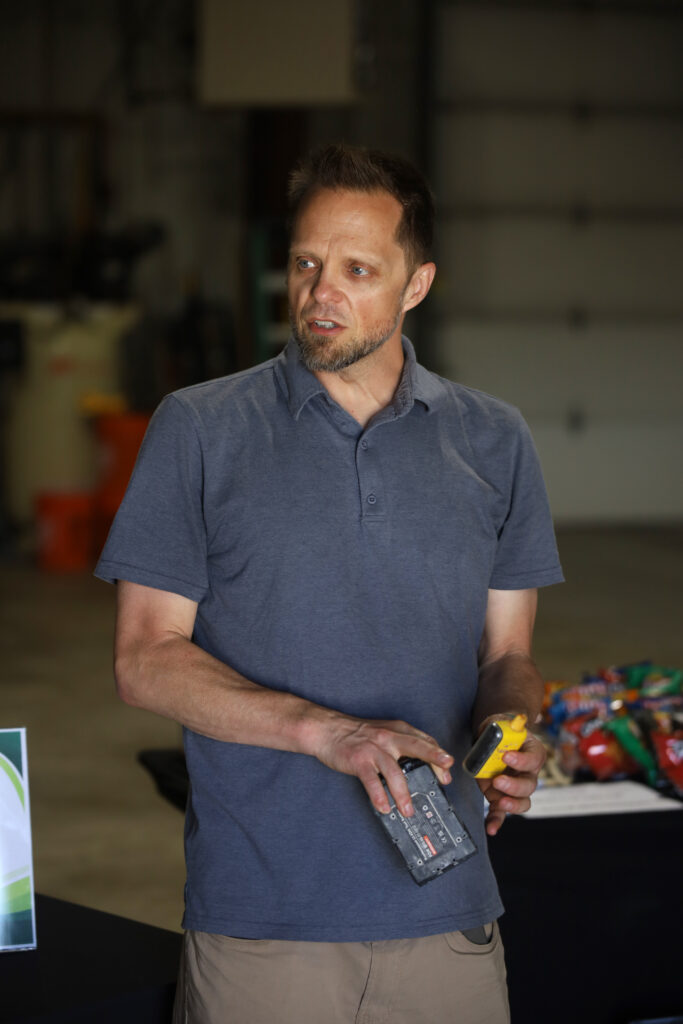
Rechargeable lithium-ion batteries have become one of the facility’s most serious operational hazards. Two fires this year were traced to discarded vape devices, which contain lithium batteries. When punctured or compacted, lithium batteries can enter thermal runaway, producing a jet flame that is difficult to extinguish.
The facility has partnered with local vape shops to collect batteries separately. Batteries are packed in barrels layered with glass beads to contain thermal events during shipping and recycled at no charge to residents.
“Tell all your friends, don’t throw these away,” Chetterbock said.
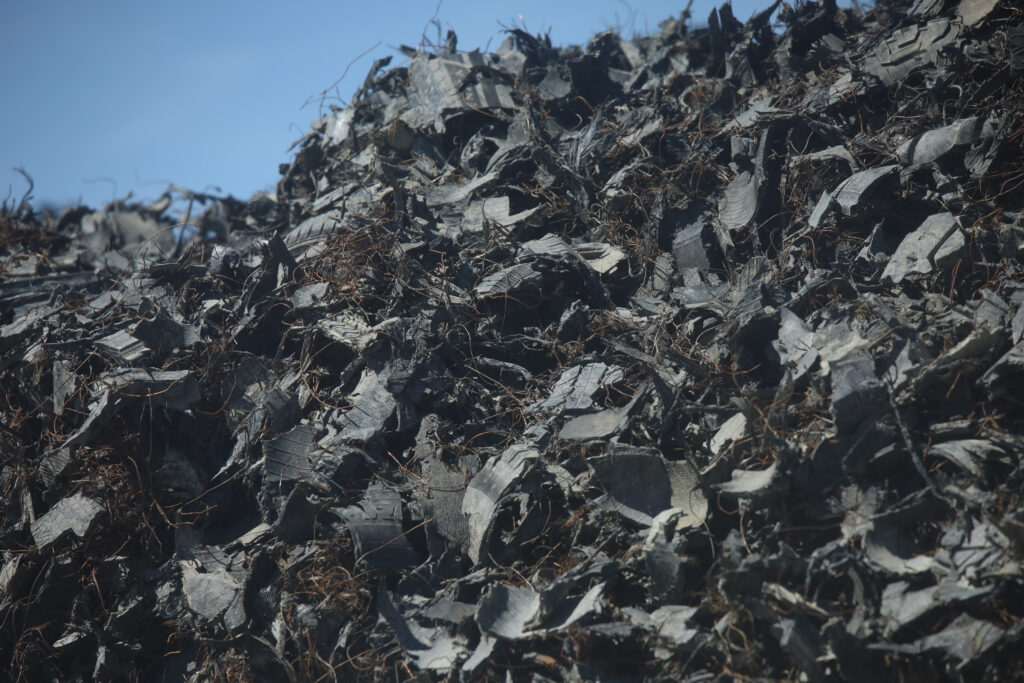
Tires present a separate and longstanding challenge. Chetterbock said that tires would take up to much valuable airspace in the landfill, along with their tendency to work their way above ground after being buried and creating “tombstones”.
The facility processes approximately 800 tons of tires per year, with a mobile shredding contractor from Idaho brought in twice annually. Shredded tires are permitted by Wyoming DEQ for use as alternative daily cover, and the district is in discussions with an Idaho company about diverting 100% of tire shreds to tire-derived fuel markets by around 2029, where the material is used to power cement kilns.
Looking ahead
The landfill currently has an estimated 25 to 27 years of life remaining. The district’s master plan includes a piggyback option, lining existing filled areas and building upward, which engineers say could add roughly 120 years of life to the site. The district also owns land to the south for potential future expansion.
Chetterbock said the district is in early discussions about expanding its service boundaries to include Green River, Jamestown and Granger, which currently lack a solid waste district and pay per-ton tipping fees to use the Rock Springs facility.