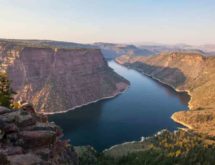
LARAMIE WYOMING — In Wyoming, beauty in nature abounds. But with that wild beauty can come natural hazards.
The major geologic hazards in the state are earthquakes and landslides. In 2014, there were 49 earthquakes with magnitudes greater than 2.5 in Wyoming; 20 had magnitudes greater than 3.0, with 17 of those events in Yellowstone.
While earthquakes and landslides can pose a risk to people, property and infrastructure, Wyoming is fortunate to have such a rural population, minimizing this risk. However, it is important to have an understanding of the types of hazards we do have and where they have historically occurred, to be prepared. This is especially true for landslides during spring.
Landslides are most common during spring and early summer when a freeze-thaw process can cause soils to become unstable and rocks to fracture. Repeated freeze and thaw cycles can weaken the rock along those fractures, which can cause rock falls and landslides. To learn more about the types of landslides we have, log on to the WSGS Landslides page.
Check out the new WSGS Summary Report on Wyoming’s Geologic Hazards, with detailed information landslides as well as the state’s historic earthquakes and Yellowstone.