
| A note from the editor: Death, mental health, addiction, religion and faith, politics, grief, regret, body image—the list of “taboo” topics is a long one. We often avoid these conversations for two simple reasons: they can cause arguments, or they make us uncomfortable. Even if we are uncomfortable, it’s time to start talking about it! Years ago, a coach at a gym I attended repeatedly said, “Get comfortable being uncomfortable.” I’ve carried those words with me ever since. September is Suicide Prevention Month, and here at TRN Media, we’re challenging Sweetwater County to do just that—get comfortable being uncomfortable. We’re bringing awareness to suicide and, more importantly, starting conversations through a series of stories from our friends, neighbors and community members whose lives have been touched by suicide. This is Part Three of our “Let’s Talk About It” series. If you missed the first installments, catch up on other’s journey of turning loss into a mission to break the silence surrounding suicide. Read Part One: “Let’s Talk About It: Turning Pain Into Purpose” and Part Two: Let’s Talk About it. Turning Pain Into Purpose Part 2: Charlotte |
Wyoming native Mya Boren has spent much of her life helping others navigate mental health. Then, she found herself in a crisis of her own—and one phone call changed everything.
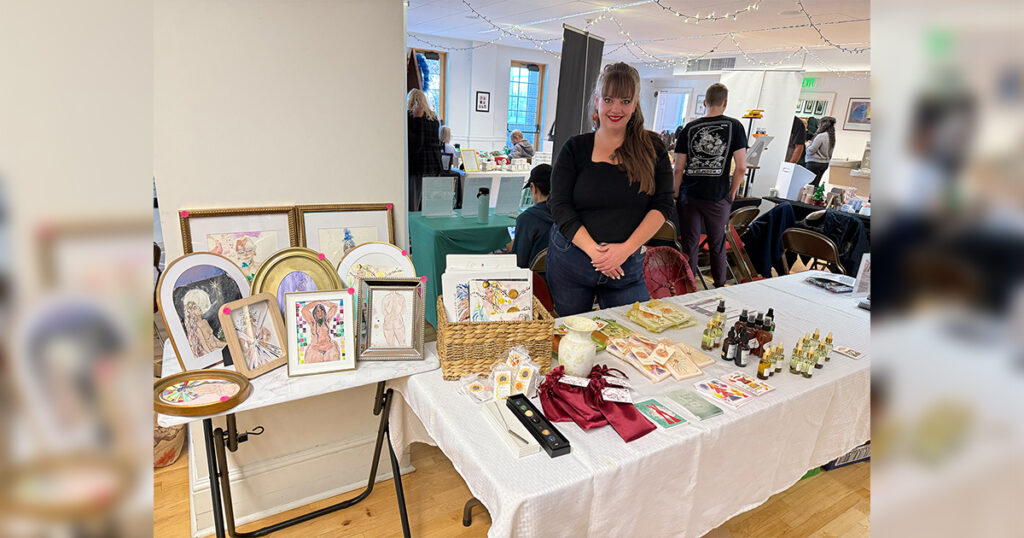
Mya Boren is a Wyoming native, mother of two, certified peer specialist, writer and owner of a wellness business in Rock Springs. She has spent much of her career working in the mental health field, often alongside therapists and counselors and helping others recognize that there is hope, even during the most difficult seasons of life. But in 2015, Boren found herself facing a mental health crisis she never expected to experience herself. “My story is ironic because I’ve been working in the mental health arena since 2008, and my own mental health issues started in 2015,” Boren said.
Her experience eventually brought her within one car ride of taking her own life.
Today, she shares her story because she wants people to understand that mental health struggles do not discriminate—and that knowing how to help others does not necessarily mean you will always recognize when you need help yourself.
When the Thoughts Became Terrifying
Boren describes a period of her life when she was experiencing psychological symptoms she didn’t yet have words to explain. “It was terrifying,” she said.
She began experiencing intrusive thoughts, including thoughts of harming herself, and in some instances, harming others. She also struggled with intense anxiety and a fear that she would somehow lose control of her actions and those thoughts would come to fruition. Boren says she began viewing herself differently because of the thoughts she was experiencing. “I looked at myself as a monster,” she said. Internally, she was experiencing turmoil. But outwardly, very little appeared to be wrong. “On the outside, I smiled at people, I did my job and I woke up every day and did my makeup,” Boren said. Her experience is a reminder that a person doesn’t necessarily have to look like they are struggling for them to be struggling.


The Day Everything Changed
One morning, Boren woke up with the thought that she had reached her breaking point. “This is it. This is the day,” she remembers thinking.
She took her children to daycare and her plan was to return to her house, grab a gun and head to the desert. In that moment, she believed she had found an opportunity to act on her suicidal thoughts. Boren says she believed at the time that her children would be better off without her and that she was protecting them from the burden she believed she had become. As she drove, however, Boren says something stopped her. She remembered a billboard she had seen in Rock Springs. Its message was this: “Taking your life by suicide doesn’t take away your problems, it just gives them to someone else.” The words halted her. “I’m not going to give this to my kids,” she remembers thinking.
That moment of clarity gave Boren enough space to reconsider what was happening. Her training began to come back to her.
“Knowledge is power,” she said.
Instead of continuing down the path she had been on, Boren made another decision: She needed to get to work.
One Phone Call
Boren called her boss from her car in the parking lot of her place of employment. Her boss was a counselor, and Boren says she was finally honest about what was happening. For the first time, she allowed someone else to see what was happening beneath the surface. That phone call, Boren says, saved her life. She considers herself fortunate that she worked in an environment where immediate support was available. But even though she spent her days working alongside mental health professionals, she says she had been afraid to ask for help. She unnecessarily worried that her coworkers would see her differently. “I was afraid they would see me as weak, irresponsible and not capable of doing my job,” she said. This was the furthest thing from reality.
At the time, Boren says she was overwhelmed by fear of judgment and concerned about her image and credibility. She was afraid to let people see what was really happening.
I was stuck in a place where I was not being my true self.
Her experience changed the way she viewed access to mental health care. Boren believes everyone should have access to immediate support when they need it—not only people who happen to work in a mental health office.
Learning What to Do With the Thoughts
Looking back, Boren wishes she had known more about what to do when suicidal or intrusive thoughts first appeared. She says no one around her could have simply recognized what was happening because she didn’t give anyone the opportunity to see it.
Today, she wants people to understand that having a thought does not mean you have to act on it. Boren describes suicidal thoughts as a messenger—something that can emerge when emotional pain becomes overwhelming. One strategy she used is to pause and challenge the thought rather than immediately accepting it. “Stop, thought,” she said. Boren encourages people to remember that they have power over how they respond to their thoughts, so you tell your brain, stop the thought.
Another approach is Catch it. Check it. Change it.
Catch the thought.
Check the thought.
Change the way you respond to the thought.
For Boren, the goal is to create a pause between the thought and the action. “You are in control,” she said. “Give yourself a pause.”



You Are Not the Only One
Boren says people often don’t realize how harshly they speak to themselves. She wants people who are struggling to understand that they are not the first person to experience these thoughts, and they will not be the last. “You’re not the first one. You aren’t the only one. You’re not the last one,” she said.
There are people who have experienced similar struggles, she says, and there are people who have found their way back to a life they love. Boren also encourages people to stop keeping their pain entirely to themselves.
“Secrets will kill you,” she said. “Once you speak it out loud, it’s lost most of its power to do damage to you.”
She believes conversations about suicide and mental health need to become more normalized. She says these thoughts can happen. Life can be difficult. People can reach a point where they don’t believe they can keep going or don’t know where to find support. Boren says help exists. “You just have to find it.”
Be Gentle With Yourself
Boren’s message isn’t that people need to have everything figured out. In fact, she says the opposite. “We don’t need to be perfect. We need to be ourselves.”
When someone is struggling, she encourages them to focus on what they need in that moment rather than making major decisions about their future while they are in crisis. “Be gentle with yourself,” Boren said.
She encourages people to pay attention to their immediate needs. Are you hungry? Eat. Are you exhausted? Rest. Do you need a shower? Take one. Take care of yourself in the moment. Most importantly, Boren wants people to remember their own value.
“You are valuable. And you deserve to live a life that you love.”
Boren now makes it her mission to help others by bringing knowledge. She runs a wellness business, is working on writing a book and she works on her self healing through yoga, painting and massage.
She encourages people not to let fear of disappointing others, hurting someone’s feelings or making a change keep them trapped in a life that isn’t working for them. And if suicidal thoughts do arise, Boren wants people to know they don’t have to face them alone. She says to reach out. Tell someone. Find a person who makes you feel safe and supported. Because sometimes, the most important step isn’t having all the answers. It’s simply giving yourself enough time to find them. Knowledge is power.
YOU ARE NOT ALONE. HELP IS AVAILABLE.
If you or someone you know is struggling with thoughts of suicide, experiencing a mental health crisis, or simply needs someone to talk to, please reach out. You do not have to go through it alone.
988 Suicide & Crisis Lifeline
Call or text 988 — available 24 hours a day, 7 days a week.
Free and confidential support is available for people experiencing a mental health or substance-use crisis, as well as those concerned about a loved one.
Southwest Counseling Service — Sweetwater County
Mental Health Services: 307-352-6680
1124 College Drive, Rock Springs
Walk-in Open Access appointments are available Monday through Thursday, 12–4 p.m.
Sweetwater County School District #1 — Rock Springs
Students can reach out to a school counselor, social worker, teacher or principal for help.
District Office: 307-352-3400
The district also maintains mental health and suicide prevention resources for students and families.
Sweetwater County School District #2 — Green River
Students can reach out to their school counselor, social worker, teacher or principal for help.
District Office: 307-872-5500
SWCSD #2 also offers school-based wellness resources and mental health support.
Wyoming Crisis Text Support
Text WYO to 741741 for free, anonymous, 24/7 crisis support in Wyoming.
Remember: You don’t have to be at the point of crisis to ask for help. If something doesn’t feel right, talk to someone. Start the conversation. Reach out.