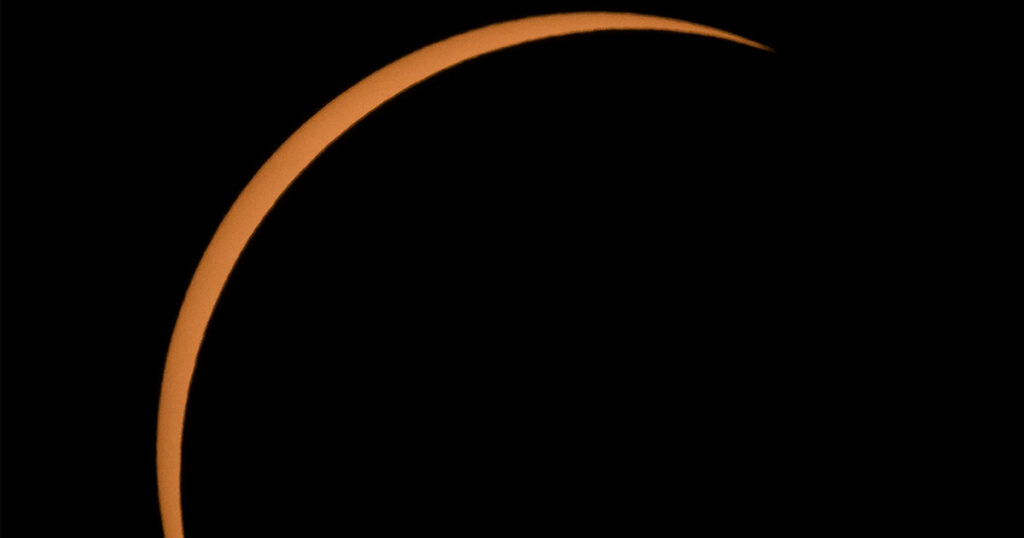

WYOMING — The 2024 solar eclipse is just a few hours away, the path stretching across North America this Monday afternoon.
While 15 states from Maine to Texas are in the path of totality, Wyoming will have a view of a partial eclipse between 40% to 60%, with Sweetwater County within the 50% to 60% range. According to GreatAmericanEclipse.com, the greatest totality Wyoming will see will take place around 12:30 to 12:35 p.m.
This eclipse differs from the Aug. 21, 2017 eclipse when Wyoming was a destination spot for many eclipse viewers, as parts the state were right in the path of totality.
According to NASA, this eclipse has a wider path than in 2017, which will allow more Americans to view a total eclipse in person. In 2017, the path ranged from about 62 to 71 mikes wide, while this eclipse’s path will range between 108 and 122 miles wide. Around 31.6 million people live in the path of totality this year, compared to 12 million in 2017.
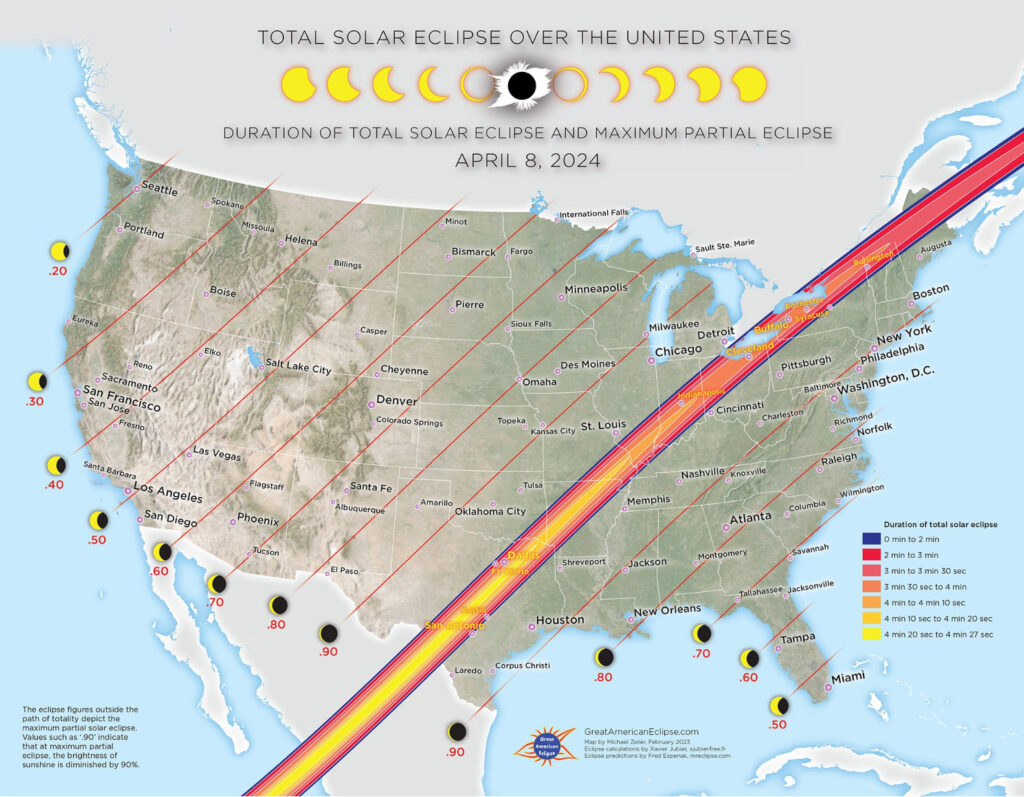
Additionally, NASA reports that totality will last longer this year, lasting up to 4 minutes and 28 seconds in Mexico. The longest period of totality experienced in 2017 was near Carbondale, Illinois, at 2 minutes and 42 seconds.
It is not safe to look at the eclipse without safety glasses, so avoid looking up if you don’t have any. If you don’t have safety glasses, there are several livestreams available online and on YouTube. The next total eclipse will be Aug. 23, 2044.